
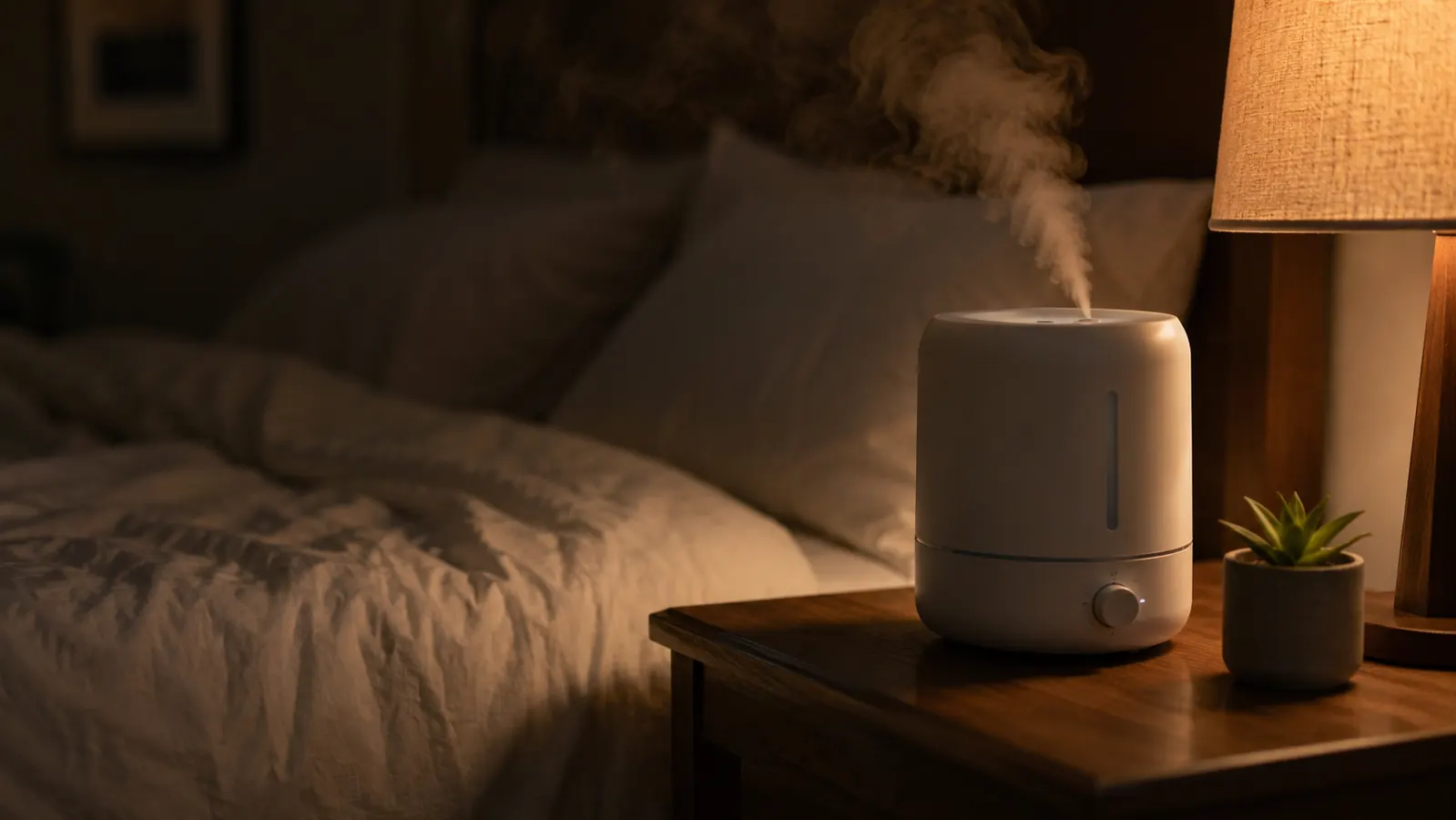
I've had a Levoit cool mist humidifier running on my nightstand for four winters straight now, and it's the one piece of sleep gear my partner and I never think to unplug once the heat kicks on for the season. Most of what gets said about bedroom humidifiers stops at a single line, your throat will feel less dry, which is true but is only one small slice of what raising the humidity in a room actually changes. After a few years of running the same unit night after night, I've noticed ten separate, physical things shift once the air stops being bone dry.
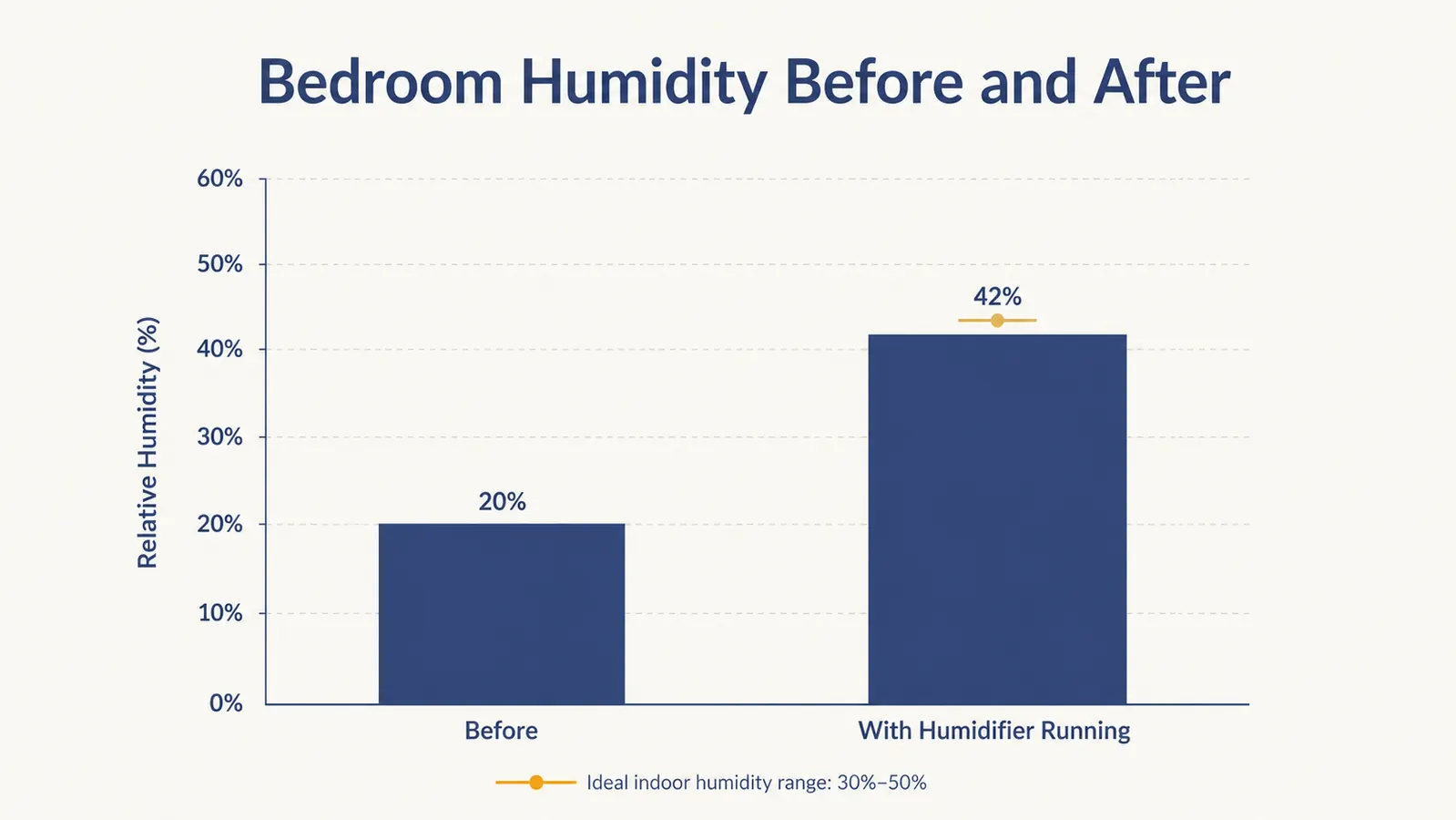
None of these are medical claims and I'm not pretending a humidifier replaces a doctor. These are the plain, observable differences between a dry winter bedroom and one sitting around 40 to 45 percent humidity, the kind of thing you notice in your skin, your sheets, and your furniture before you'd ever check a hygrometer. I go into the mechanics of getting there in a separate step-by-step guide to easing dry air with a humidifier, but this list is the plain payoff, ten things that changed once the Levoit became a permanent fixture instead of a once-in-a-while gadget.
Winter air already working against your sleep?
Forced-air heat pulls moisture out of everything in the room, including you, all night long. See today's price on the Levoit cool mist humidifier and what's actually in the box.
Amazon Check Today's Price on Amazon →Winter heat dries out the whole room, not just your throat
Forced-air furnaces and baseboard heaters both warm the air without adding any moisture back, so relative humidity can drop into the teens or low twenties on the coldest stretches. That shows up everywhere at once, tight-feeling skin, sheets that feel papery instead of soft, wood trim that creaks more than it did in summer. Running a humidifier overnight puts some of that moisture back before it becomes a whole-room problem.
Static electricity in the sheets and hair calms way down
Dry air is a big part of why winter is static season, low humidity lets electrical charge build up on fabric and hair instead of dissipating the way it does in a more humid room. I used to get a small shock pulling the blanket up most nights in January, and my hair would crackle when I brushed it before bed. Once the room sits in a more comfortable range, both mostly disappeared.
Dry lips and cracked-feeling skin stop being a nightly given
Low humidity pulls moisture straight out of exposed skin, which is why lips, hands, and the skin around your nose tend to feel tighter and rougher through winter no matter how much lotion you apply before bed. Adding moisture back into the air overnight takes some of that pressure off, so you're not fighting the same dryness fresh every morning. It's not a replacement for lotion, but you'll reach for it less.
A scratchy, dry-feeling throat in the morning stops being routine
This one is just an observation, not a medical claim: breathing dry air all night tends to leave the back of your throat feeling parched when you wake up, especially if you sleep with your mouth even slightly open. Once the room holds more moisture overnight, that first-thing-in-the-morning scratchiness noticeably eased up for me. I still keep water on the nightstand, but I'm not reaching for it the second my eyes open anymore.

Wood furniture, floors, and instruments stop drying and creaking
Wood is porous and shrinks slightly as it loses moisture, which is why hardwood floors can develop small gaps and a wood dresser drawer that slid smoothly in summer can start sticking by February. If you keep a guitar or anything with a wood soundboard in the bedroom, dry winter air is genuinely hard on it, tuning drifts and the wood can crack over a bad season. A more stable humidity band protects all of that.
A cool bedroom stops feeling harsh at the edges
I like sleeping in a cool room, but there's a difference between cool and comfortable versus cool and dry, which reads as sharp, almost brittle air against your skin. Adding humidity back doesn't change the thermostat number, but it changes how that same temperature feels against your face as you're falling asleep. The same 66 degrees feels noticeably gentler with some moisture in the air than it does bone dry.
The steady low hum becomes its own kind of background sound
On the low setting, the Levoit puts out a soft, consistent whir, nothing close to a fan on high, just a steady hum that sits underneath the rest of the room's quiet. I didn't buy it for this, but it functions almost like a mild white noise machine, masking small household sounds that would otherwise register as a disturbance. If you already run a fan or sound machine, this stacks right on top of that.
Auto shutoff means you can actually leave it running unattended
I was hesitant to run any appliance all night for years, out of the same general caution most people have about leaving something plugged in and unattended for eight hours. The auto shutoff on this unit turns it off on its own once the tank runs dry, instead of running the fan and heating element with nothing left to mist. That single feature is why I stopped feeling like I needed to check on it before bed.
The tank size lines up with a real night's sleep, mostly
At 2.5 liters, the tank runs on the low setting for roughly a full night, sometimes closer to a night and a half if the room isn't especially dry. That's enough that you're not getting woken up by a unit shutting off mid-sleep, but not so large it becomes bulky furniture on your nightstand. Bump it to medium before bed and expect to top it off closer to nightly instead of every other day.
The top-fill design means refilling doesn't turn into a small chore
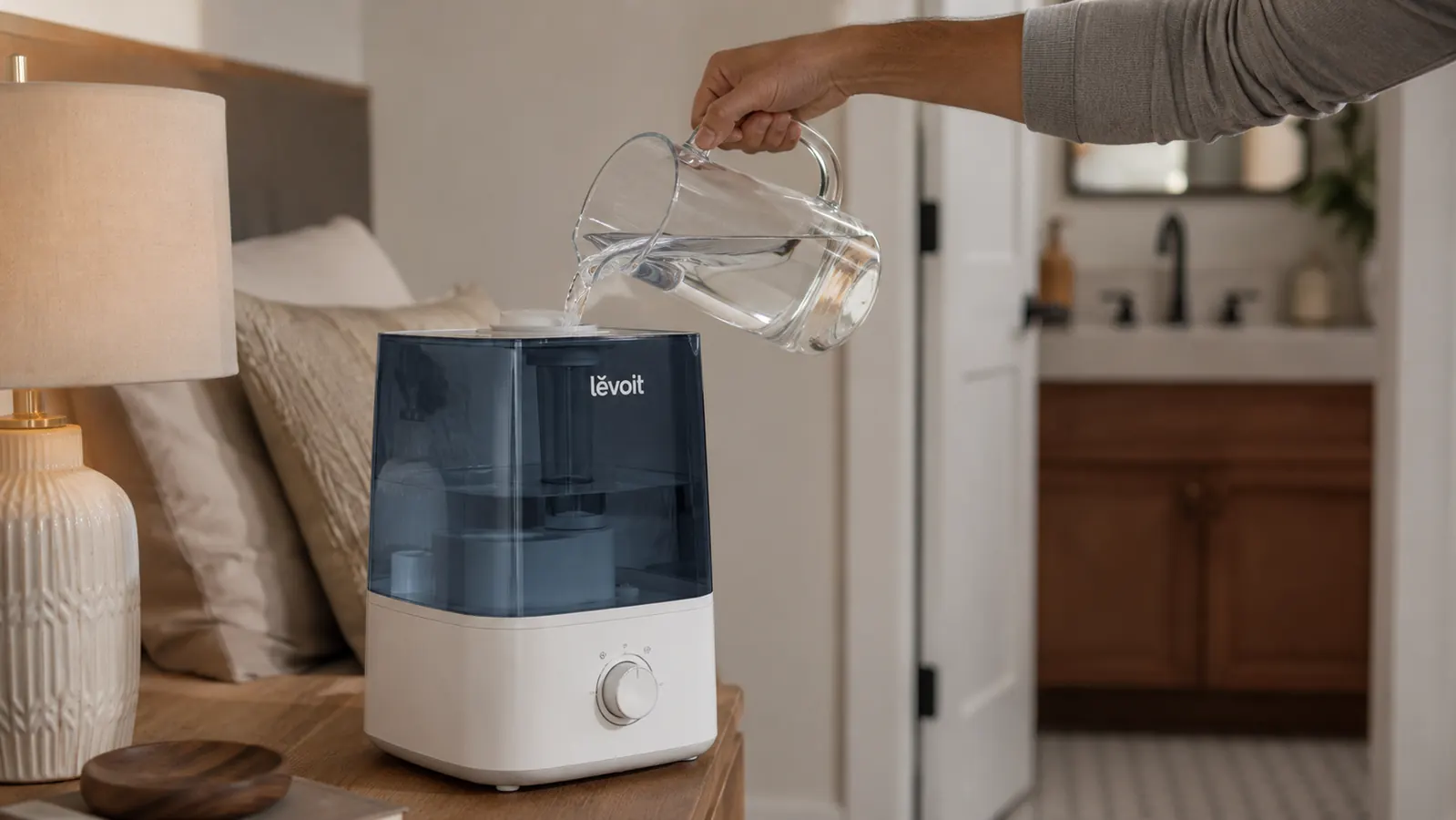
This sounds minor until you've used a bottom-fill humidifier with an awkward removable base that sloshes water everywhere the second you tip it toward the sink. The top-fill opening on this one means I can carry the whole unit to the faucet, tip water straight in, and have it back on the nightstand in under two minutes, no separate lid to hunt down. It's the kind of detail that decides whether a routine actually sticks.
What I'd Skip
I'd skip running any humidifier on tap water without a plan to clean it, hard water leaves mineral scale in the tank fast, and that buildup is what eventually causes white dust on nearby surfaces if it's ignored long enough. I'd also skip cranking it to the highest setting all night just because the room feels dry, overshooting the range can leave windows fogging or bedding feeling faintly damp by morning. A weekly wipe-down and the low or medium setting overnight is really all it takes with the Levoit. For the fuller month-by-month picture of upkeep and how the noise held up over time, I covered that in a separate long-term review after four months of nightly use.
None of these ten things are dramatic on their own. Add them up over a whole winter and the room just feels like a different place to fall asleep in.
Ready to stop fighting dry winter air every night?
The Levoit humidifier is the one that's stayed on our nightstand through four straight winters. See today's price and what's included in the box.
Amazon Check Today's Price on Amazon →