
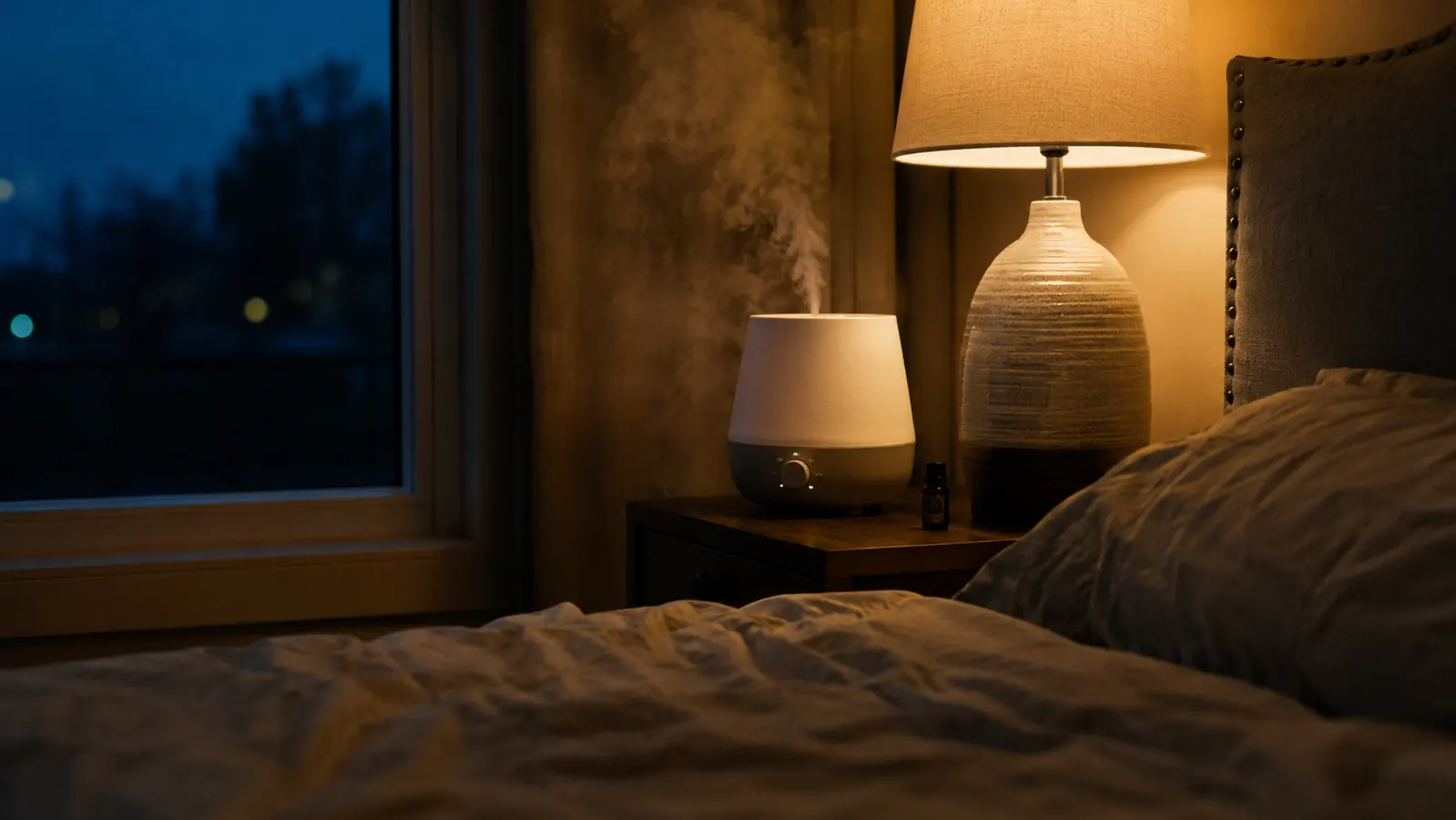
I moved the Levoit humidifier onto my nightstand at the start of the dry season and it has not come off since. That is four months of nightly use, not a two-week trial run I forgot about halfway through. I wanted to know what actually happens once you get past the first honeymoon week: how often the tank really needs filling, whether the low setting stays quiet at month three the way it did on night one, and whether the mineral scale everyone warns about turns into a real chore or stays a five-minute wipe.
I run a small bedroom humidifier every dry season because I sleep better with some moisture in the air, and because I test sleep gear for a living, in my own bed, under my own roof, for as long as it takes to know if a product holds up. This is the long-term half of my coverage on this particular unit. If you want the shorter, more blunt rundown of what surprised me and what I would flag before you buy, that lives in a separate honest review. This piece is about what four straight months of runtime actually looks like, refill by refill and wipe-down by wipe-down.
The Quick Verdict
A quiet, low-maintenance cool mist humidifier that held its noise level and output steady across a full season, with mineral scale that is manageable if you clean on a schedule instead of waiting for it to become a project.
Amazon Check Today's Price →Still waking up with a dry throat every morning?
That is dry indoor air talking, not something you have to just live with through the whole season. See today's price on the Levoit humidifier and what's actually included in the box.
Amazon Check Today's Price on Amazon →How I Tested It
My setup is simple and I kept it the same every night: the humidifier sits on a low dresser about four feet from the head of the bed, filled with tap water, on the low mist setting unless the room dropped noticeably dry, in which case I'd bump it to medium for an hour before bed. I tracked the room with a cheap hygrometer on the same dresser, checked it in the morning and again before I filled the tank at night, and wrote down the number more nights than not. That is not a lab. It is one bedroom, one person's sleep, and four months of the same routine, which is closer to how you'll actually use this thing than any spec sheet.
I also didn't baby it. I let the tank run close to empty a few times before I remembered to refill it, I skipped a cleaning or two when I was traveling, and I used regular tap water the entire time instead of distilled, because that's what most people are actually going to do. If the unit was going to show wear or start acting up under normal, slightly neglectful use, four months was enough time for that to surface. I also went in already having weighed a humidifier against a diffuser for this bedroom, since the two get lumped together constantly and they solve different problems.

Tank Size and How Often I Actually Refilled It
The Levoit's tank holds 2.5 liters, and on the low setting that got me roughly two full nights before it ran dry, sometimes closer to a night and a half if the room was especially arid or I'd bumped it to medium for part of the evening. That settled into a rhythm fast: fill it every other morning, top it off before bed if I'd used the higher setting the night before. It is not a huge tank compared to some of the larger console units on the market, but it is manageable enough that I never felt like I was babysitting it. The top-fill design matters here more than I expected going in. I can carry the whole unit to the sink, tip it under the faucet, and have it back on the nightstand in under two minutes, no separate lid to hunt for and no awkward bottom-fill tipping where water sloshes onto the dresser.
By month two I had it down to a habit: fill on the days I make coffee, which is every day, so I never actually let it sit dry longer than a night. The 360-degree rotating nozzle also meant I could point the mist away from the wall or the nightstand lamp without moving the whole unit, which sounds minor until you've had a humidifier fog up the finish on a piece of furniture.
The Noise Level, Night After Night
This was the thing I was most skeptical about going in, because I have used cheap humidifiers before that hum loud enough to notice under a white noise machine, and I didn't want to trade dry-air discomfort for a mechanical drone all night. On the low setting, the Levoit is close to silent. I have to put my ear within a foot or two of the unit to hear the faint whir of the fan and the soft bubbling of the mist output. From bed, four feet away, it disappears entirely under a fan or a sound machine, and even in a fully quiet room it reads as background hum at worst, not a distraction that pulls you out of sleep.
On the medium setting it is audibly working, a light whoosh that I'd compare to a laptop fan spinning up, not loud but noticeable if the rest of the room is silent. I only ran it on medium in short bursts before bed, so I can't speak to sleeping through a full night on that setting, but for the low setting specifically, which is what I used probably 80 percent of nights, the noise floor did not change across the four months. No new rattle, no new whine, nothing that suggested a fan bearing wearing down or a part loosening from vibration. That consistency mattered more to me than the initial quiet, honestly, because plenty of devices are quiet on day one and start ticking by week six.
Mineral Scale and the Real Cleaning Routine
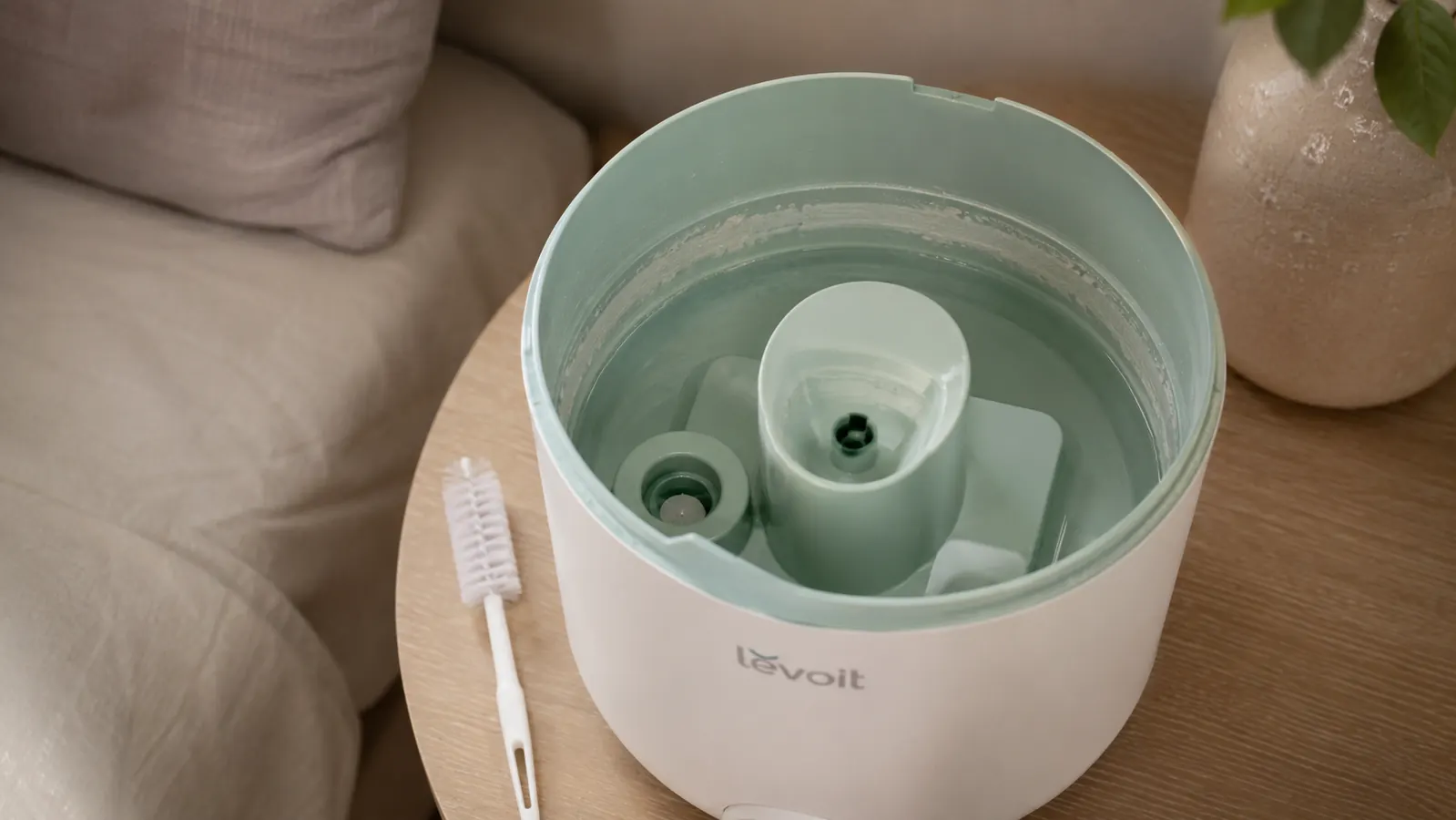
I run tap water, which means mineral scale is not an if, it's a when. By about three weeks in, I noticed a faint white ring forming at the waterline inside the tank, the kind of chalky residue you'd expect from hard water sitting in a container and slowly evaporating its dissolved minerals out. It did not affect the mist output or the sound, but I did not want to let it build indefinitely, so I settled into a cleaning routine: full wipe-down with a vinegar and water solution once a week, and a deeper scrub with the small brush every two to three weeks to get into the base where the ultrasonic disc sits, since that's the part most prone to scale interfering with output over time.
The whole process takes about ten minutes when I do it, which is honestly less than I expected walking in. Fill the tank partway with a vinegar and water mix, let it sit for fifteen or twenty minutes, then use the brush on the base and around the fill opening, rinse, wipe dry, done. Skipping it for a stretch, which I did once over a week of travel, meant the ring was slightly more stubborn to scrub off when I got back to it, but nothing that required soaking overnight or replacing a part. If you're the kind of person who will actually stick to a weekly wipe, this is a low-maintenance unit. If you're the kind of person who lets things go for two months, expect to spend a longer session getting the scale off when you finally circle back to it.
Dust on the Nightstand, or Lack of It
One thing I specifically watched for, because it's a common complaint with ultrasonic humidifiers and hard water, is white dust settling on nearby surfaces, the fine mineral residue that can spray out along with the mist if the water is hard enough. Over four months, I did notice a very light film on the dresser surface directly around the unit, checked maybe once every couple of weeks with a finger swipe, but it was subtle, not the visible white coating you sometimes see with cheaper units running consistently hard water on a high setting. Running it on low most nights likely helped here, since higher mist output tends to carry more mineral content into the air. If your tap water is particularly hard, I'd expect more of this than I saw, and switching to distilled or filtered water would cut it down further, but for my water and my routine, it stayed manageable with the same weekly wipe-down I was already doing for the tank.
What I Liked
- Tank lasted roughly two nights on low before needing a refill
- Top-fill design makes refilling fast and mess-free
- Noise stayed low and consistent across four months of nightly use
- Mineral scale is manageable with a simple weekly wipe routine
- 360-degree nozzle lets you redirect mist without moving the unit
Where It Falls Short
- Tank capacity means it's not a true set-it-and-forget-it for more than about two nights
- Hard tap water will leave some residue on nearby surfaces over time
- Medium and high settings introduce noticeably more fan noise
- Skipping cleaning for more than a couple weeks makes scale harder to remove
By week three the room had a settled, steady dampness to it that just felt normal, not damp, not dry, just right, and that's really what I was after the whole time.
Where the Room Humidity Actually Settled
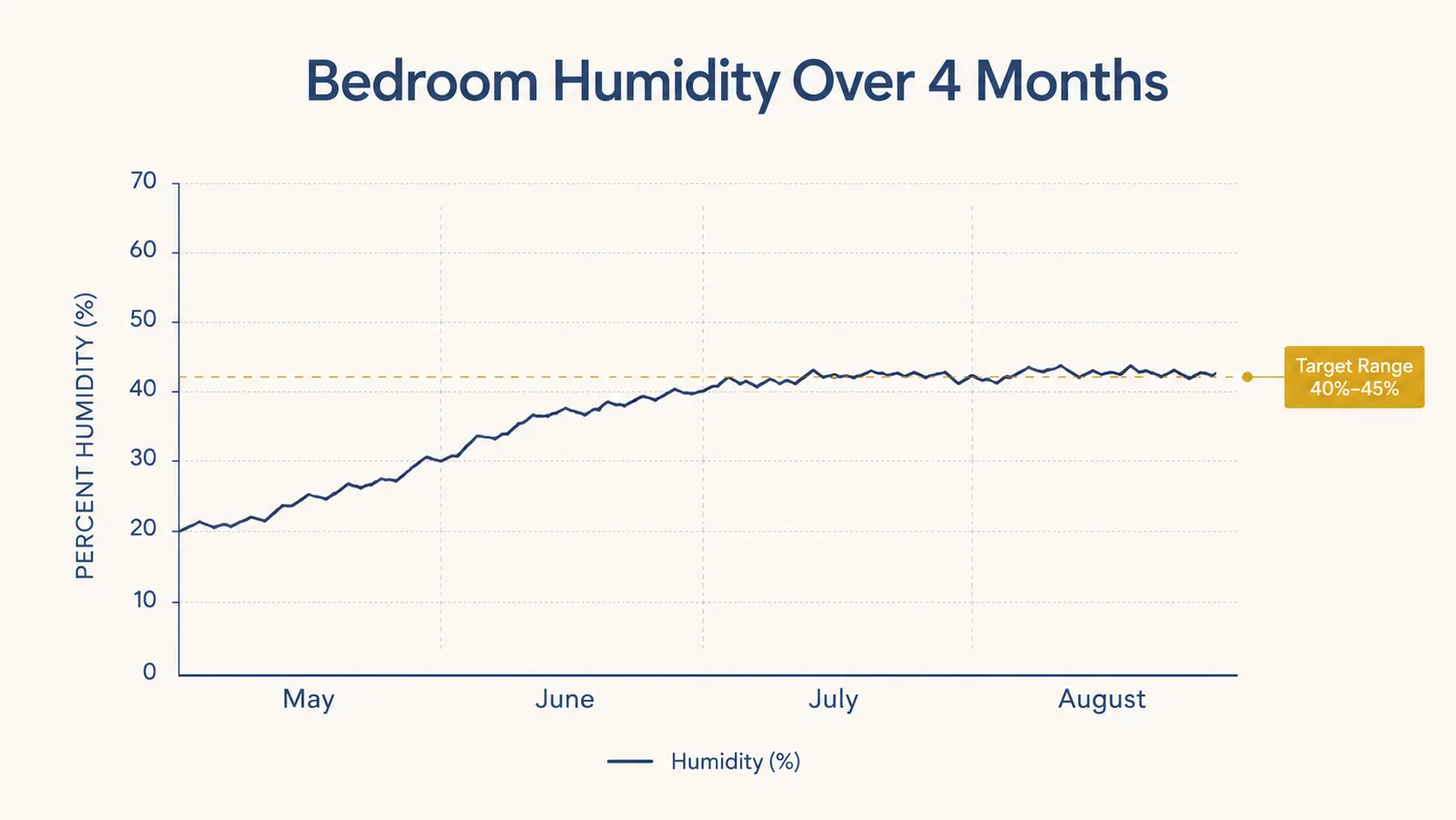
My bedroom started the dry season reading in the low 20s percent humidity most mornings, which is dry enough that I'd wake up with a scratchy throat and static in my hair more nights than not. Within the first week of running the Levoit nightly, the morning reading climbed into the low 30s. By the second month, with the routine locked in, it settled into a consistent band in the low 40s percent, and it stayed there for the rest of the four months with only small dips on nights I forgot to fill the tank or let it run dry partway through. That range, roughly 40 to 45 percent, is generally considered a comfortable indoor humidity band, and it lined up with noticeably less dry-throat discomfort and less static on waking. I want to be careful here: this is one room, one hygrometer, and my own subjective sense of comfort, not a clinical measurement, but the pattern was consistent enough across four months that I trust it.
The Levoit didn't have to work overtime to hold that range either. Once the room reached its steady state, low setting overnight was enough to maintain it through most of the season. I only needed medium on the driest stretches, usually a handful of nights when an especially dry cold front came through. If you want a wider list of why bringing one into the bedroom tends to pay off, I laid out ten reasons a humidifier helps you sleep in a separate piece that covers more ground than I can here.

Who This Is For
This is a solid pick if you want a bedroom humidifier you can run every night without thinking too hard about it: the tank size fits a normal refill rhythm, the noise stays out of the way on low, and the cleaning routine is quick if you keep up with it weekly. It's a good fit for anyone dealing with the general discomfort of dry winter air, dry throat, static, that parched feeling when you wake up, and who wants a straightforward cool mist option rather than something with a dozen extra features to manage. It's also a reasonable fit if your schedule is irregular, shift work, early starts, travel weeks, since the routine here is forgiving enough to survive a missed refill or a skipped cleaning without falling apart.
Who Should Skip It
If your water is very hard and you're not willing to switch to distilled or filtered water, or you know you won't stick to a weekly cleaning habit, you'll likely find the mineral scale and surface dust more annoying than I did. And if you need something that runs three or four nights untouched on a single fill, the 2.5 liter tank on the low setting won't quite get you there, you're looking at roughly two nights before it needs attention.
Four months in, this is still the one on my nightstand
If dry air is wrecking your mornings, don't wait out another season of it. Check today's price on the Levoit humidifier and see if it fits your bedroom setup.
Amazon Check Today's Price on Amazon →