
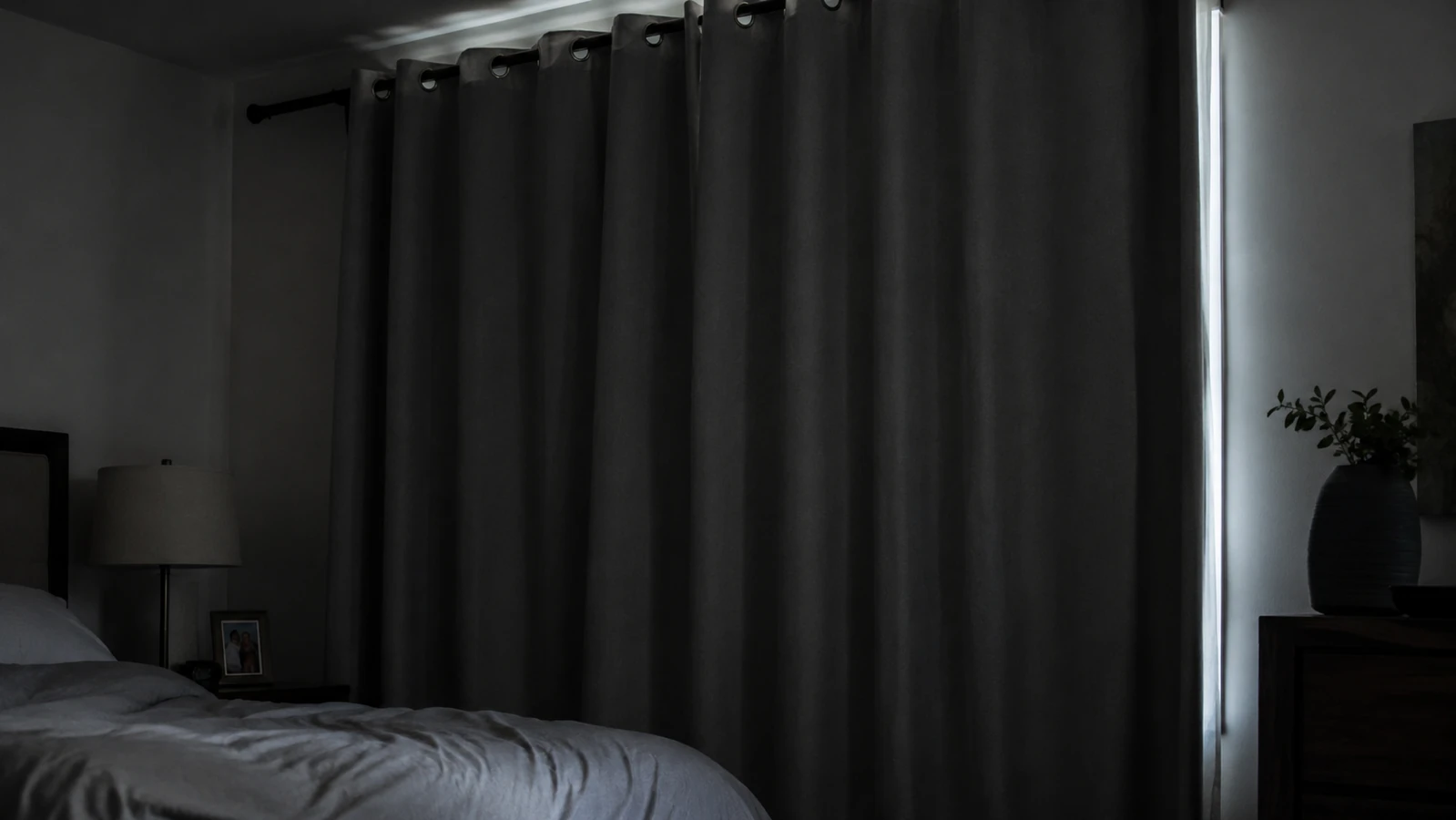
Before I hung a single blackout curtain in my own bedroom, I spent an embarrassing number of hours reading five star reviews that all said some version of the same thing, blocks every bit of light, best purchase I've ever made. Almost none of those reviews mentioned the actual gap around the rod, the actual overlap at the center seam, or the fact that most of them were written the same week the box arrived. So when I sat down to test the NICETOWN Thermal Insulated Grommet Blackout Curtains for this piece, I went in looking for the opposite of a glowing first impression. I wanted the mistakes, the fine print, and the parts nobody puts in a five star review.
A separate piece on this site walks through months of nightly use with this same pair of panels, the wear, the washing, how the room feels now. This one is different. This is the skeptical buyer's guide, the version I wish had existed before I bought my first set of blackout curtains years ago and made nearly every mistake in the book. If you're standing in the aisle, or more likely scrolling a product page at midnight trying to decide, here is what the marketing copy tends to leave out.
The Quick Verdict
Solid, honestly built panels for the price. But almost nobody buys the right size or hangs them the right way, and that gap, not the fabric, is what actually decides whether you end up with a genuinely dark room or a dim one.
Amazon Check Today's Price →Get the sizing right and this curtain does its job. Get it wrong and no fabric fixes that.
The NICETOWN grommet panels are worth the money once you know what to actually order. Check today's price before you guess at a size.
Amazon Check Today's Price on Amazon →How I Actually Test the Claims
My approach for this piece was to treat the box copy as a claim to verify, not a fact to trust. I bought two pairs of panels in two different widths, specifically so I could compare a panel sized to the window frame against one sized noticeably wider than the frame, on the same wall, using the same rod height. I hung both, closed both at night, and checked the room with the lights off and a phone camera on night mode, which shows a thin light leak far more clearly than the eye does when you're standing in a dark room trying to judge it by feel.
I also spent an evening reading through the one and two star reviews on the listing itself, not the five star ones, because complaints tell you more about real-world sizing and installation than praise ever does. The pattern was consistent almost every time. What people described as light leaking in around a supposedly blackout curtain was, on closer reading, a complaint about the panel they bought being too narrow for the window, not a flaw in the weave itself.
I want to be upfront that this isn't a lab test. I don't have a light meter with a calibration certificate. What I have is a fairly dark bedroom, a phone camera, a tape measure, and a willingness to actually return the panels that didn't hold up to what they claimed, which I did with the too-narrow pair before settling on the sizing I'll walk through below.
The Sizing Mistake Almost Everyone Makes
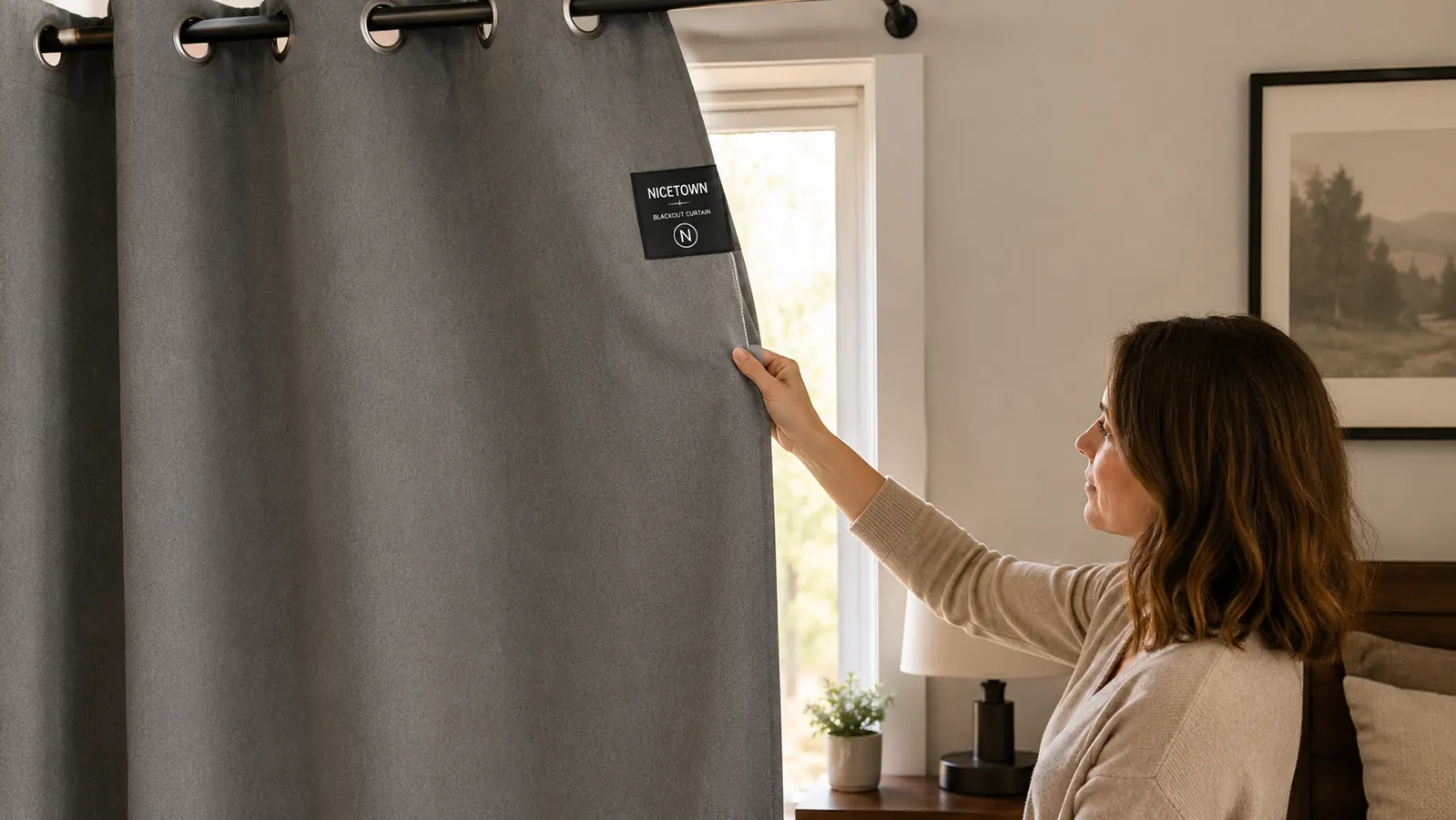
The single biggest reason a blackout curtain disappoints someone is that they measured the window and bought a panel sized to match it. That sounds logical. It's also close to backward. A curtain panel needs to be wider than the window opening, often by a significant margin, so that when it's closed it overlaps the wall on both sides rather than sitting flush against the frame edges. Order to the window measurement and you'll get a panel that closes right at the trim line, with nothing to spare, and that's exactly where light finds its way through.
With the NICETOWN panels specifically, the listing offers several widths, and the temptation is to pick the one closest to the window's actual width because it feels efficient, less fabric, less cost. In practice I'd rather see someone size up one full step past what feels necessary. On a standard 36 inch window, I'd rather see two panels that each run wider than half the window, giving real overlap at the center and past each side, than two panels that just barely meet in the middle with nothing held in reserve.
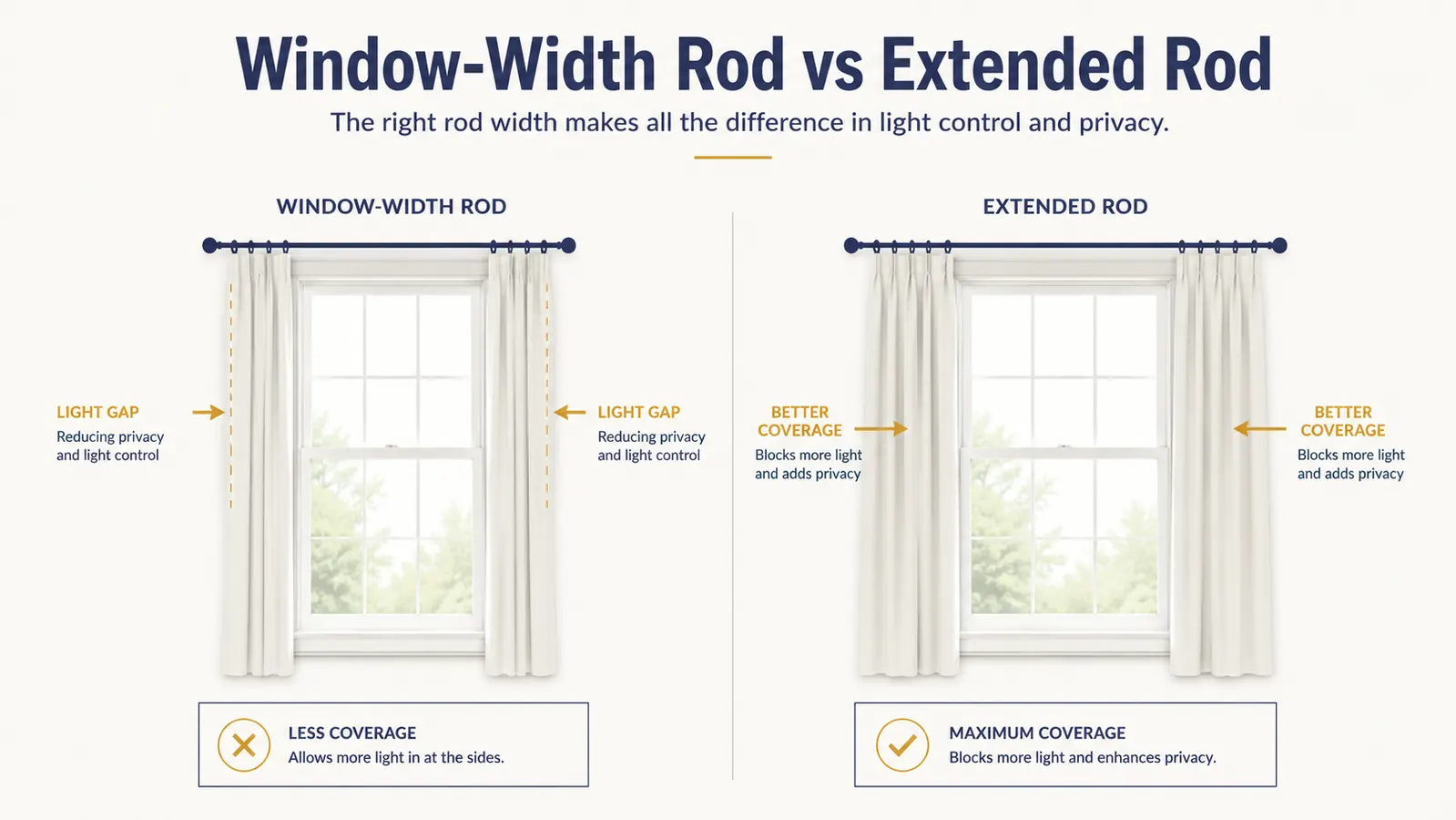
This is also the part where the rod matters as much as the curtain. A rod mounted flush to the window trim gives the panel nowhere to go but straight down against the frame. A rod extended six to ten inches beyond the frame on each side, and mounted a few inches above it, gives the fabric room to actually overlap the wall rather than the glass. If sizing and rod placement both feel like more math than you want to do, walking through the actual measurements step by step is worth doing before you order anything.
The Light Halo Nobody Mentions
Even a correctly sized panel has a halo. It's not a flaw exactly, it's just physics that nobody puts on the packaging. Light comes in from three predictable places, along the top where the panel hangs from the rod, down the sides where the fabric meets the wall, and along the bottom where the hem clears the floor or sill. A well fitted panel minimizes all three, but it rarely erases them completely, and expecting total darkness from fabric alone is where a lot of buyers end up writing a disappointed review that isn't really about the curtain.
The top gap is the one people notice least and that bothers me most. Grommet style curtains, the kind with metal rings the rod passes through, sit a visible distance below the rod itself, which leaves a strip of open space between the top of the fabric and the ceiling. In a bright room this barely registers. In a bedroom with a streetlight or an early sunrise, that strip is exactly where the glow gets in first, arriving as a soft wash across the ceiling rather than a direct beam.
A curtain won't close that top gap on its own. What helps is mounting the rod higher, close to the ceiling if the wall allows it, so the fabric drapes down over more of the window and the open strip at top sits well above eye level rather than right at the frame. If a fully sealed edge matters more to someone than the softer, adjustable look of fabric, it's worth reading how blackout blinds handle that same top and side gap differently, since a rigid frame seals in a way loose fabric structurally can't.
One Panel Per Window Is a Marketing Assumption
Product photos are part of the problem here. A single panel, gathered and pinned back with a tieback, photographs beautifully next to a window and looks complete in the thumbnail. What that photo doesn't show is that the panel is decorative in that shot, not closed for actual darkness. A lot of buyers order one panel because that's what the hero image implied was normal, then are confused when closing it only covers half the window.
NICETOWN sells these as a pair for a reason, and for most windows, a pair is genuinely the minimum, not a bonus. Two panels give you a center seam you control, one that can be pulled to fully overlap, rather than a single panel trying to stretch across an entire frame and inevitably falling short on one side. If a window happens to be wide, wider than a standard bedroom window, the honest fix usually isn't a bigger single panel, it's a wider pair, or in some cases a second rod section entirely, layered so the coverage compounds rather than stretches thin.
What Blackout and Thermal Insulated Actually Mean
Blackout, as a label on curtain fabric, describes the weave itself, typically a tightly woven face fabric backed by a foam or additional layer that limits how much light passes directly through the material. It is not a claim about the finished, installed result in your specific room. A blackout rated fabric can still let plenty of light around it if the sizing and mounting aren't right, the same way a waterproof jacket can still get you wet if you leave the zipper open. The rating describes the material, not the installation, and the two get conflated constantly in reviews.
Thermal insulated is the other phrase worth decoding. On a curtain listing it generally refers to that same layered weave doing double duty, the density that blocks light also slows some heat transfer through the window, and dampens outside noise somewhat as a side effect of the fabric's mass. It is not an insulation rating in the way a window or a jacket might carry one, and it shouldn't be read as a replacement for actual weatherstripping if a drafty window is the real problem. Treat it as a genuine but modest bonus layered onto the light blocking, not a separate feature to weigh on its own.
The Annoyances You Only Discover After Hanging Them
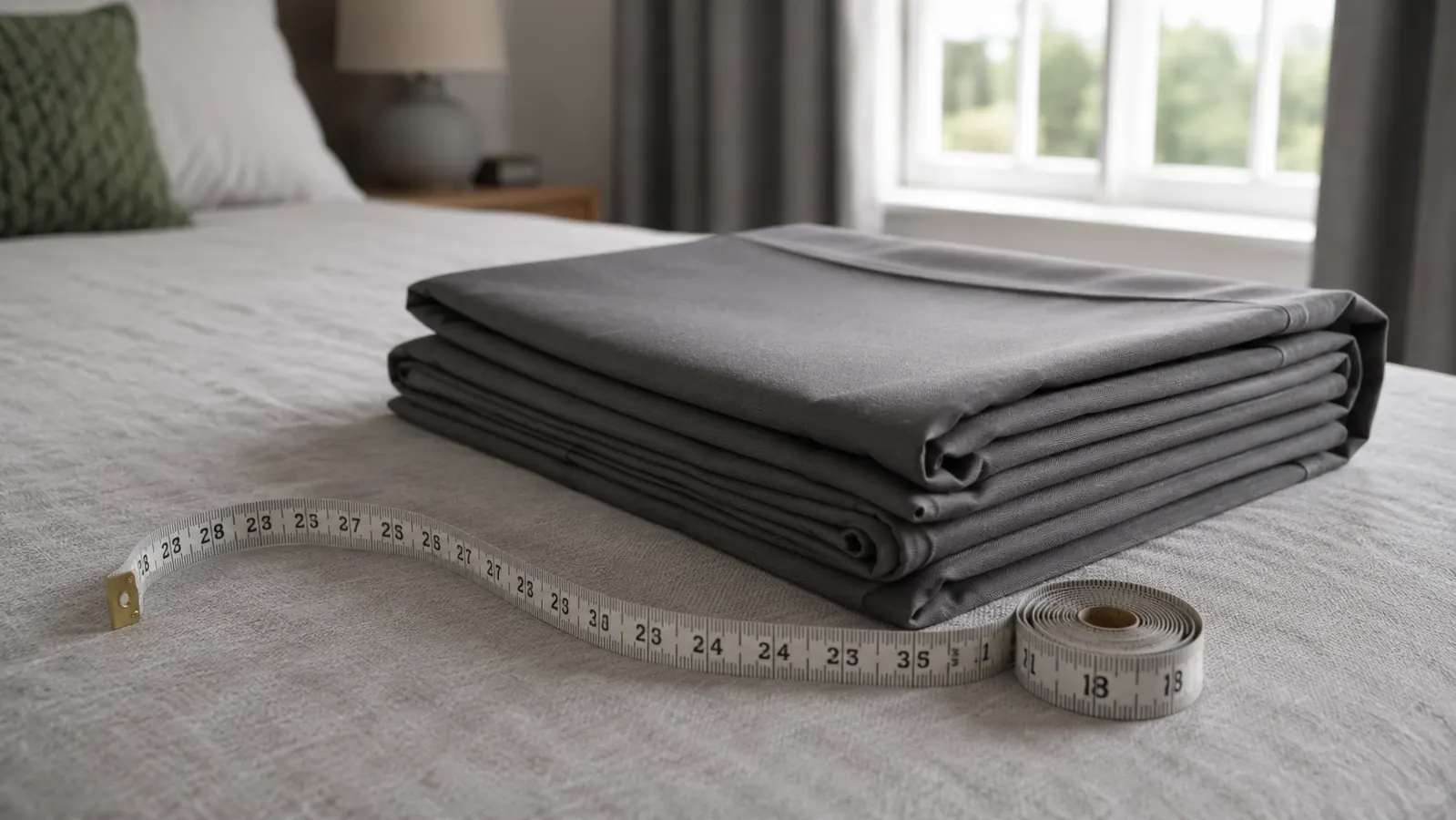
Straight out of the packaging, these panels arrive tightly folded, and that folding leaves a grid of creases that doesn't fall out on its own in a day. Steaming them or hanging them for a few days before you judge the light blockage matters more than it sounds like it should, because a heavily creased panel doesn't sit flush against itself or the wall the way a relaxed one does, and that changes how much light sneaks through the folds near the center seam in those first days.
There's also a faint new-fabric smell on arrival, mild but noticeable if you're sensitive to it, and it fades within a few days of the panels hanging in open air rather than staying boxed. Static cling shows up more in dry indoor air, especially in winter with the heat running, and a panel that clings to itself along the hem will visibly gap at that spot until you smooth it back down, which is a small daily annoyance more than a real flaw.
Hardware compatibility is the last one worth flagging. The grommet rings on these are a standard size, but a thin tension rod can flex under the weight of two full length panels, especially over a wide span, and a sagging rod undoes a lot of the careful sizing work described above. A sturdier rod, or a properly wall mounted bracket rather than a spring tension rod, keeps the panel sitting flat and closed the way it's supposed to, rather than bowing in the middle where the weight concentrates.
What I Liked
- The fabric itself genuinely blocks light where it makes contact, the weave isn't the weak point
- Sold as a pair by default, which matches how most windows actually need to be covered
- Affordable enough to size up a step without it being a real financial decision
- The thermal and noise dampening side benefits are real, even if modest
- Grommet hardware is a standard size that fits most common curtain rods
Where It Falls Short
- The listing's size chart doesn't warn you that sizing to the window, not past it, is the most common mistake
- Creases from folded packaging take real days to relax, not hours
- A thin tension rod will sag under two full panels and quietly undo the fit
- No amount of correct sizing fully closes the top gap on a grommet style panel, it only shrinks it
The curtain isn't lying to you. Most disappointed reviews of blackout curtains are actually reviews of a tape measure nobody used.
Who This Is For
This is a solid pick for anyone willing to spend fifteen minutes measuring before ordering, and willing to size the panel past the window rather than to it. Renters especially benefit, since a properly extended tension rod still requires no drilling, and the price point makes it easy to buy the right pair without agonizing over the cost of a mistake. If the plan is to actually read the sizing chart, mount the rod a few inches above the frame, and treat the pair as a pair rather than splitting it across two windows, the NICETOWN panels do what they claim.
Who Should Skip It
If the goal is truly total darkness with zero tolerance for any light, the kind needed for daytime sleep after overnight or rotating hours, fabric alone is probably not the full answer no matter which brand you choose. That top gap along the rod line doesn't fully disappear with curtains, and someone in that situation is usually better served by pairing panels with a snug sleep mask, or looking at a rigid, edge sealed option instead. It's also not the right pick for anyone unwilling to size up past the window measurement, because that single decision, more than the fabric itself, determines whether the finished result feels like a genuinely dark room or just a dimmer one.
Measure first, order the size up, and this curtain earns its price.
Once the sizing is right, the NICETOWN panels do what most blackout curtains only promise to. Check today's price on Amazon before you order a size that's too small.
Amazon Check Today's Price on Amazon →