
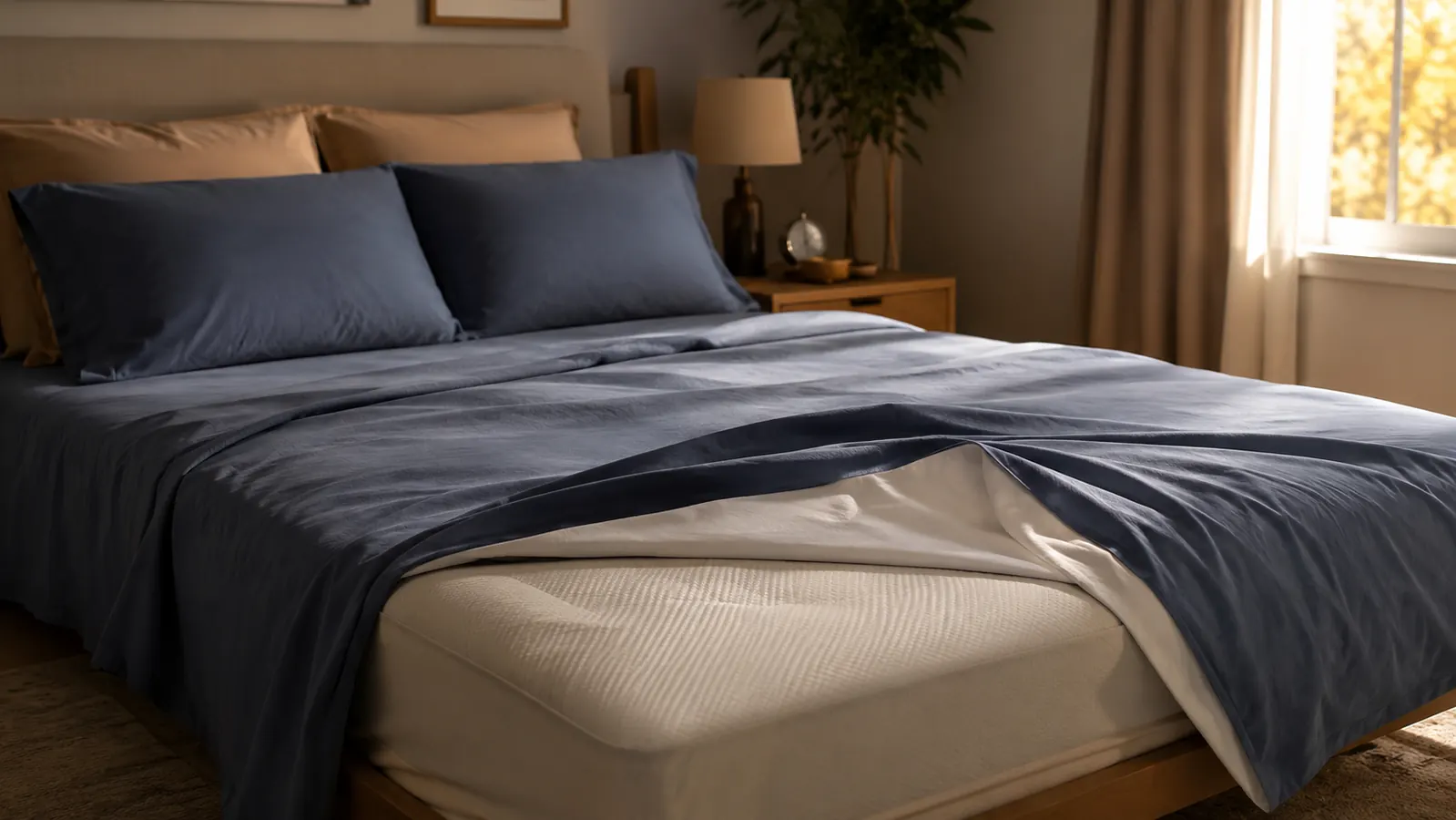
Eleven months ago I put a Linenspa waterproof mattress protector on our queen bed and told myself I'd actually track how it held up instead of doing what most people do, which is forget about it until something goes wrong. I wash our sheets every one to two weeks, which means this protector has gone through the dryer close to thirty times by now. That's the number I care about more than day one impressions, because a mattress protector that feels fine out of the package and turns loud or lumpy by month four isn't doing its job.
This review is specifically about the long haul. Not whether the Linenspa protector works on night one, but whether it still works, still fits, and still sounds quiet after almost a full year of being slept on, washed, and occasionally tested by an actual spill. I keep a short note on my phone where I log anything worth remembering, a squeak, a stain, a corner that's started to slip, and I went back through eleven months of those notes to write this.
The Quick Verdict
Eleven months in, the Linenspa protector still fits snug, still feels quiet, and the mattress underneath looks untouched. The one real tradeoff is a small amount of extra warmth on hot nights.
Amazon Check Today's Price →Still one of the highest-rated protectors on Amazon after over 100,000 reviews
If you're tired of guessing whether a mattress protector will actually hold up, the Linenspa is the one I'd point you to first. It's inexpensive enough that trying it isn't a real risk.
Amazon Check Today's Price on Amazon →How I've Used It, Night After Night
I run a fairly irregular schedule, some early starts, some nights that stretch later than I'd like, and the one thing I don't have patience for is a mattress protector that crinkles every time I roll over. That was my main worry going in, because I'd used a cheaper vinyl-backed protector years earlier that sounded like a shopping bag every time either of us shifted position. So the first two weeks with the Linenspa were mostly just me listening for that sound at 1 a.m.
It never showed up. The fabric top layer is soft enough that it reads more like a slightly thicker fitted sheet than a plastic barrier, and the waterproof layer underneath stays quiet even now, almost a year and thirty-some washes later. That's the detail that actually matters for long-term use. A protector that's silent on day one but starts crinkling by month six has failed the only test that counts, and this one hasn't.
I put it on the mattress, then made the bed normally with our regular fitted sheet on top, which is how most people actually use one of these. You forget it's there within a few nights. That's the goal, and for most of the eleven months, that's exactly how it went. The only reminders it was there at all came from the moments it mattered, a spill, a wash day, or the one accident I'll get into further down.
Our mattress is a fairly standard queen innerspring, nothing exotic, and I mention that because how a protector performs can shift depending on what it's stretched over. On a firmer surface I'd expect the fitted skirt to hold its shape even longer, since there's less flex pulling at the seams every night. On a plush pillow-top, the fabric has more give to work with, but the elastic has to do more of the holding. Ours sits somewhere in the middle, and eleven months in, I haven't had to readjust the corners once.
The Waterproof Backing After a Year of Washing
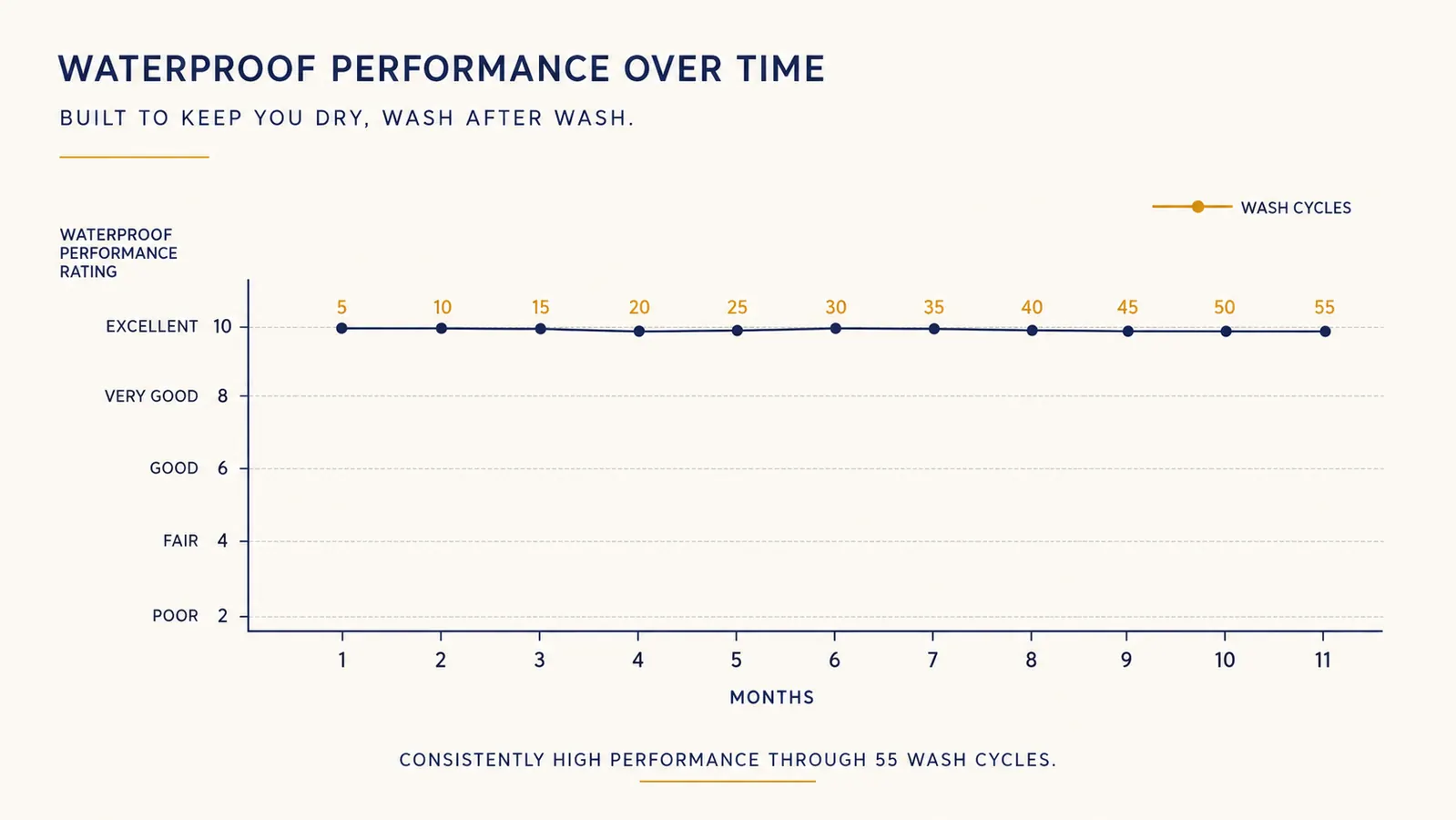
Waterproof backings are where a lot of mattress protectors quietly fail. The fabric wears in gently, but the backing underneath can start to flake, peel, or lose its seal after repeated trips through a hot dryer, even when the label says machine washable and dryer safe. I wash the Linenspa protector on cold with the rest of our bedding and tumble dry on low, which is the setting the label recommends, and I've been checking the backing every couple of months by holding a section up to a light.
No flaking, no cracking, no thin spots. The waterproof layer still feels like one continuous membrane rather than something starting to separate from the fabric. I did have one weekend where a friend's dog stayed with us and had an accident on the bed in the middle of the night, and that was honestly the real-world test I hadn't planned for. The protector caught it entirely. Nothing reached the mattress, and once I stripped the top sheet and wiped the surface down, the protector itself went straight into the wash like normal.
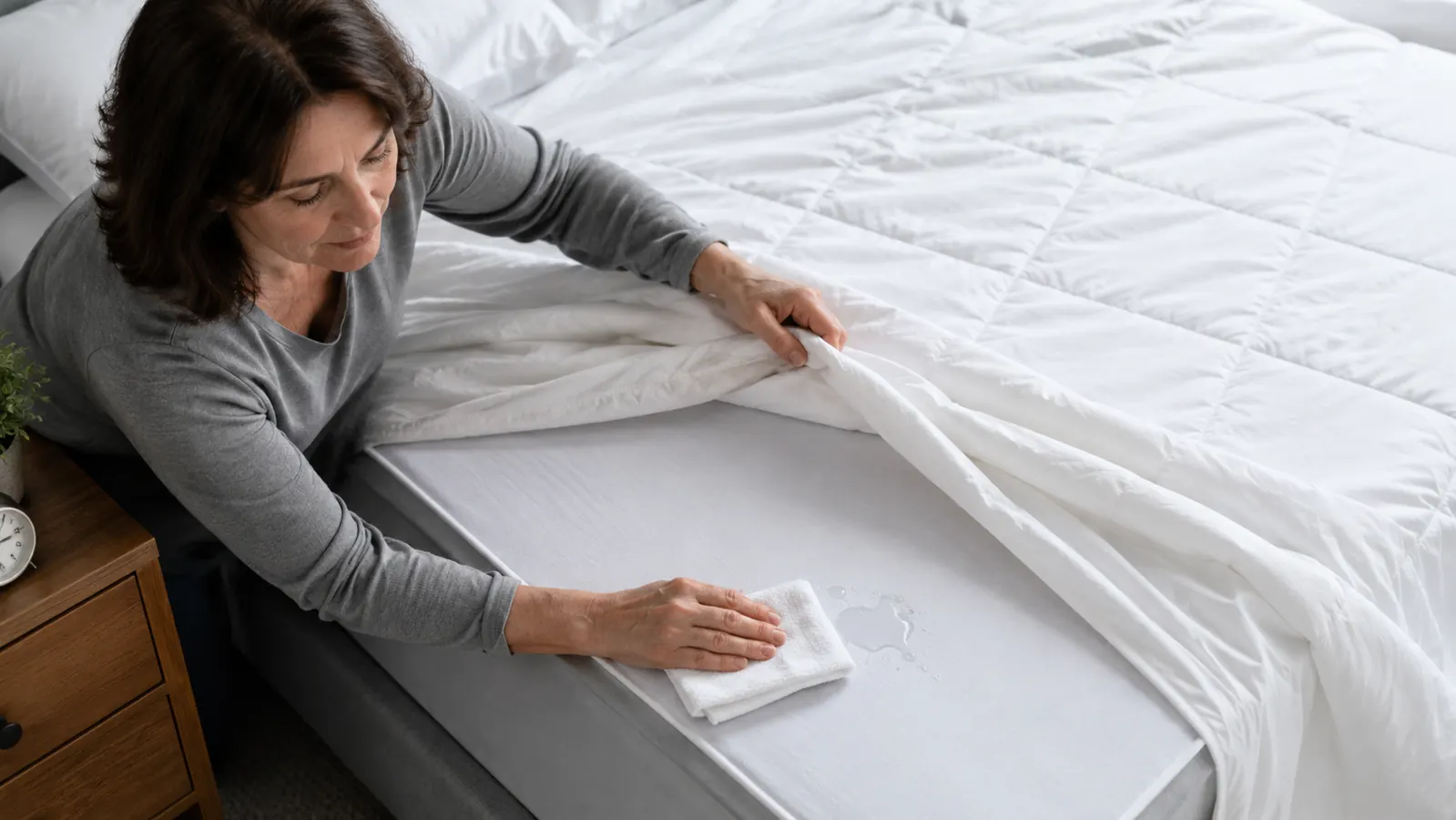
I've also spilled a full glass of water on the bed twice this year, once from a nightstand mishap and once from setting a mug down wrong. Both times the water beaded and sat on top long enough for me to blot it with a towel before it went anywhere. That's the whole point of a waterproof protector, and it's still doing that job the same way it did in week one.
The one washing habit I'd flag for anyone buying this is heat. High heat is what breaks down waterproof backings faster than anything else, so I've stayed disciplined about low or medium settings even when I'm in a hurry and tempted to crank the dryer up. It's a small habit, but I think it's the reason this protector has held up as well as it has, more than any particular feature of the fabric itself.
Heat, Noise, and What It Actually Feels Like at 2 a.m.
This is where I'll give the honest tradeoff, because no waterproof layer is free. Any material that blocks moisture from passing through also blocks some airflow, and the Linenspa protector is no exception. On most nights I don't notice a difference, but during a stretch of warm summer nights I did feel slightly warmer than I remember feeling on the bare mattress before it went on. It's not dramatic, more like the difference between a thin cotton sheet and a slightly heavier one, but if you already run hot at night it's worth knowing about going in.
What hasn't changed at all is the noise. I keep coming back to this because it's the detail most reviews skip after the first week, and it's the one that actually determines whether you keep using a protector long-term or quietly stop bothering with it. Eleven months and roughly thirty washes in, there's still no crinkle, no plastic sound, nothing that wakes either of us up when someone rolls over. That consistency is the biggest reason I still recommend it.
I tested the noise question more deliberately than I probably needed to. A few months in, I rolled from one side of the bed to the other slowly, then quickly, then sat down hard on the edge the way you do when you're getting up half asleep. No sound in any of those cases beyond the normal give of the mattress itself. That's still true today.
The Corners, the Fit, and What's Underneath After a Year
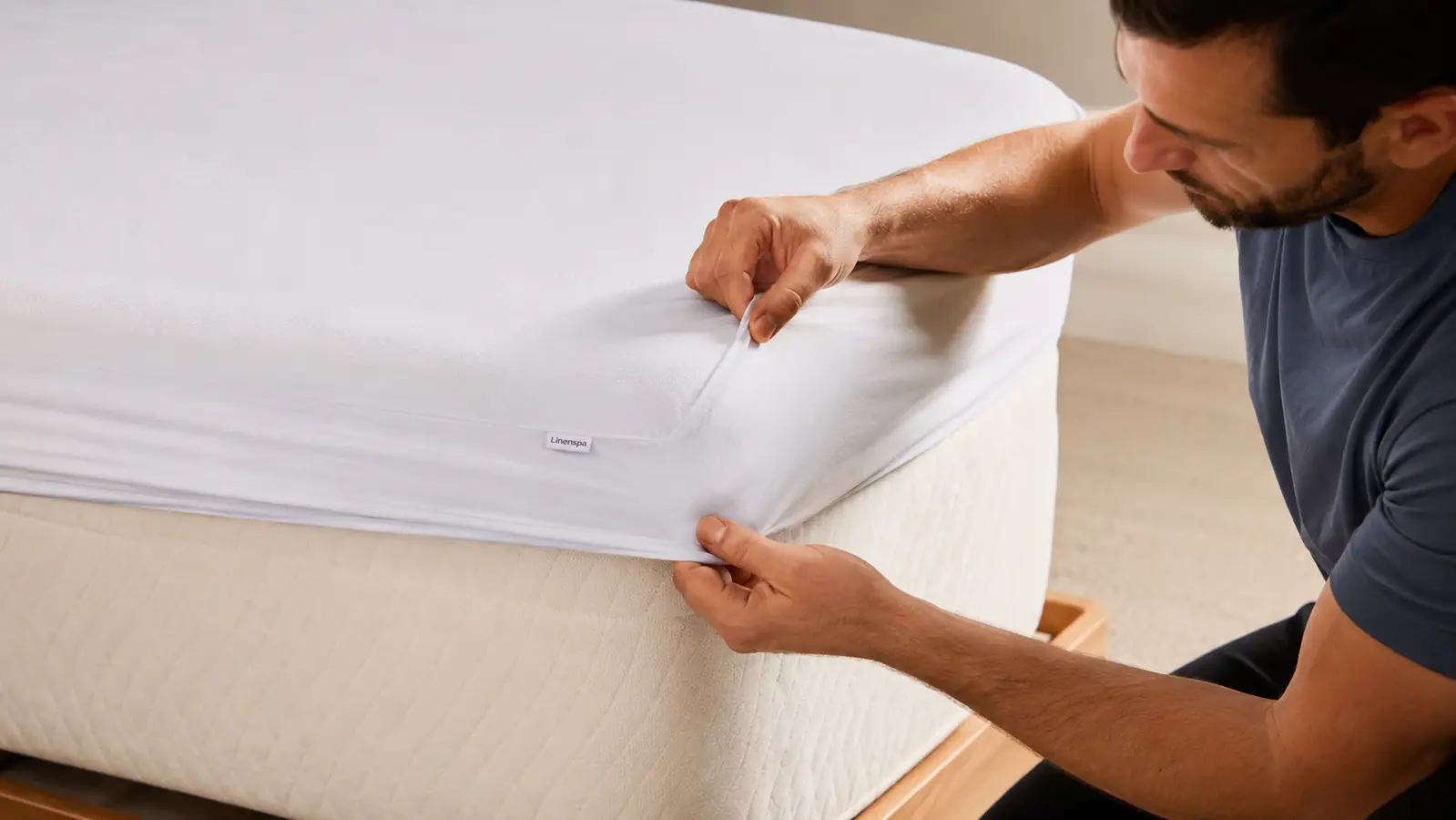
Elastic is usually the first thing to go on a fitted product like this. I've had fitted sheets lose their grip on the corners within a few months, popping loose in the middle of the night and bunching under a shoulder. The corners on the Linenspa protector are still snug against our queen mattress, no visible stretching, no gapping at the edges where the mattress could peek through.
I pulled the whole protector off recently just to check the mattress underneath, which is the real proof of whether a year of use meant anything. The mattress looks exactly like it did the day we bought this protector. No staining, no dust buildup on the surface, no lingering smell from the one accident it caught. That's the outcome I was testing for from the start, a mattress that stays in the condition it started in, not just a protector that feels nice for the first month.
Refitting it after that check took about thirty seconds, corner by corner, and it settled back into place the same way it did the very first night. If the elastic had softened at all after a year of stretching on and off for washing, I'd expect to feel it in that moment, some looseness or a corner that didn't quite pull taut. I didn't feel any of that.
Alternatives I Considered Before Settling In
Before committing to the Linenspa protector for the long haul, I looked at a couple of pricier options with cooling-branded fabric tops, thinking the extra cost might solve the warmth tradeoff I mentioned earlier. In the reviews I read, the pattern repeated itself: people liked the initial feel, then reported the same crinkling and backing issues after several months that I'd hoped to avoid. Paying more didn't seem to buy durability, it mostly bought marketing.
I also tried a mattress pad style product for a short stretch on a guest bed, which adds cushioning but isn't fully waterproof in the same way. If you want a side-by-side on that distinction, I broke it down in mattress protector vs mattress pad. For our main bed, where the priority was protection that would hold up night after night without me thinking about it, the fitted, fully waterproof style is what I kept coming back to, and Linenspa is the version that's actually delivered on that over a full year.
There's also a broader case for just having one of these on any bed in the house, guest room included, before you ever have a reason to need it. I laid out the full list of reasons in 10 reasons you need a mattress protector, but the short version is that you never know in advance which night will be the one that matters.
What I Liked
- Waterproof backing shows no flaking or peeling after roughly thirty wash cycles
- Stays quiet, no crinkle or plastic sound even after a year of nightly use
- Fitted corners still hold snug on a queen mattress with no visible stretching
- Caught a real overnight accident completely, mattress underneath was untouched
- Inexpensive enough that trying it carries almost no downside
Where It Falls Short
- Slightly warmer than a bare mattress on hot nights
- Fabric top is functional rather than plush, it's a working layer, not a luxury topper
- You still need a separate mattress pad if you want extra cushioning
Eleven months and thirty washes later, the real test wasn't how it felt on night one. It's that I forgot it was there at all.
Who This Is For
This is the right pick if you want a set-it-and-forget-it layer of protection under your regular sheets, especially if you keep irregular hours and can't afford a mattress protector that makes noise every time you shift. It's also a smart buy if there's any chance of spills, night sweats, or an occasional pet accident in your bed, since the whole value is in what happens on the one night you actually need it to work.
It's also a sensible default for a guest room or a bed that gets used by visitors you don't fully control, since you get real protection without having to explain or apologize for it being there. Nobody notices a good mattress protector under a regular set of sheets.
Who Should Skip It
If you already sleep hot and aren't willing to trade any airflow for protection, the slight warmth increase might bother you more than it bothered me, and you may want to look at a more breathable option even if it costs a bit more. And if what you're really after is extra cushioning rather than protection, this isn't that product. For that, a mattress pad or topper is the better fit, and I compared the two directly in mattress protector vs mattress pad if you want to see which one actually solves your problem.
It's also not the product to reach for if you're chasing a hotel-plush feel on top of the mattress. This is protection first, comfort second, and it does the first job well enough that I've stopped thinking about the second one.
One year in, this is still the protector I'd buy again
If a queen mattress protector that stays quiet, stays waterproof, and holds its fit for a full year sounds like what you need, this is the one I'd start with.
Amazon Check Today's Price on Amazon →