

Every silk pillowcase review I read before I bought one told me the same three things: less frizz, cooler nights, fewer wrinkles. None of them told me how many listings labeled 100% silk are actually satin, which is a weave, not a fiber, and can be made from polyester just as easily as from silk. None of them told me what momme weight actually means or why a rock-bottom price on a supposedly pure mulberry silk case should make you slow down, not speed up. So I bought a DKBslik pillowcase, read the listing the way I'd read a contract, tested it for weeks, and washed it the wrong way once on purpose so I could tell you exactly what happens.
This is not the long-term diary version of this review. I've already written that one, tracking ninety nights and more than a dozen washes in detail. This is the version for someone standing in front of the buy button trying to figure out if they're about to get real silk or a slippery imitation, and what to do differently once it arrives so it actually lasts.
The Quick Verdict
Real mulberry silk at a fair price, but you have to read the listing yourself, wash it correctly from night one, and accept that it will slide on the pillow more than the marketing photos suggest.
Amazon Check Today's Price →Before you buy any silk pillowcase, check the fiber content, not just the word silk.
This DKBslik listing states the fiber content plainly, which is more than most competing listings bother to do. See the current listing details and today's price for yourself.
Amazon Check Today's Price on Amazon →How I Tested This, and What I Checked Before I Trusted It
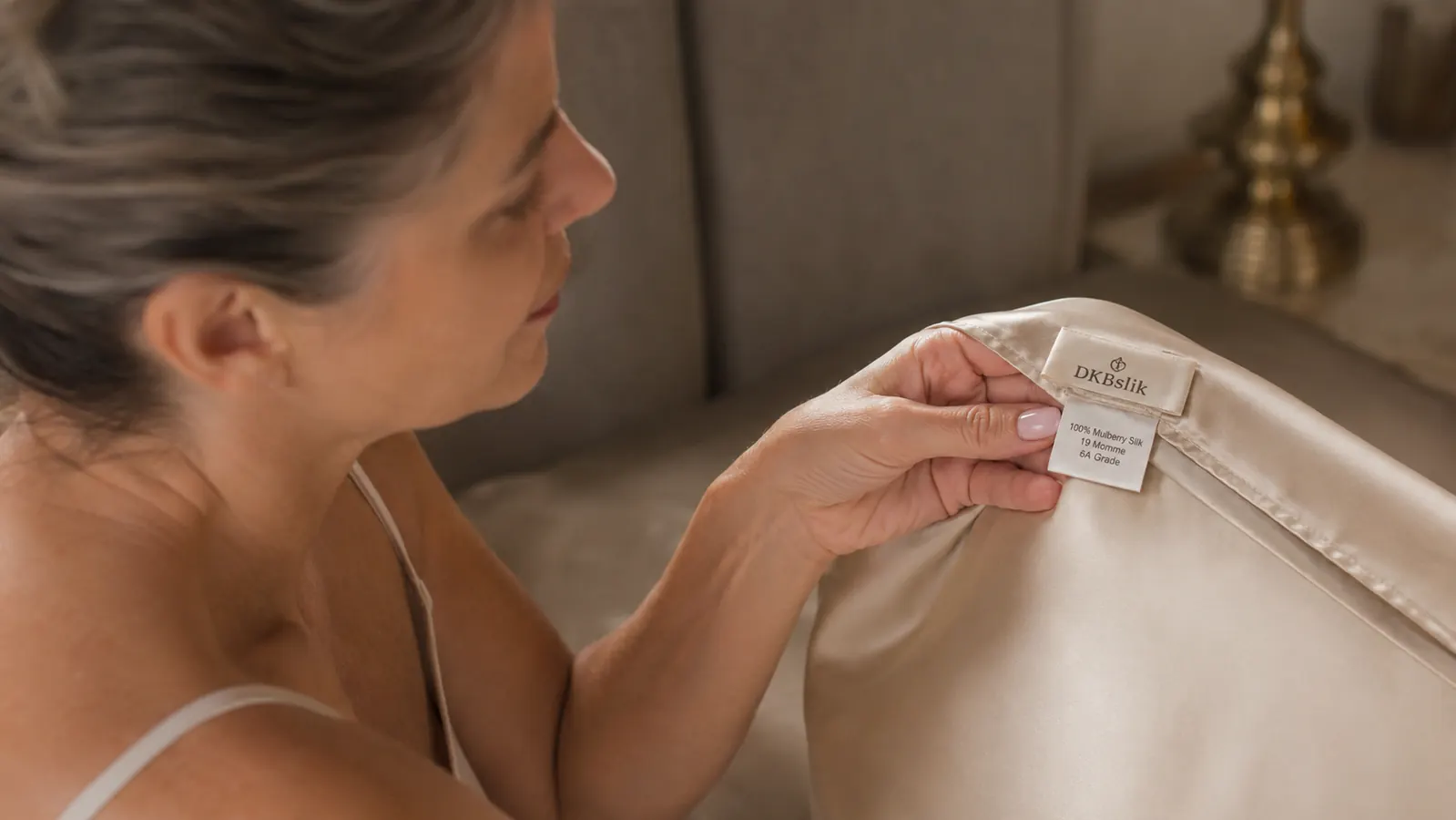
Before I ever ordered the DKBslik case, I did something most reviewers skip, which is read the listing the way you'd read fine print instead of skimming the bullet points. I looked for a stated fiber content, not just the word silk in the title, because a title can say silk and a fabric content line can say polyester and both are technically legal. I also looked for a momme weight number, care instructions that went beyond a single vague line, and enough recent photo and video reviews from other buyers to confirm the product in hand matched the product in the listing photos.
Once it arrived, I ran it through what I'd call an honest week, not a flattering one. I used it every night, I checked the seams and the zipper under a bright light rather than a quick glance, and on one deliberate wash I broke every care rule at once, warm water, regular cycle, no mesh bag, just to see how forgiving or unforgiving the fabric actually is. Most reviews only tell you what happens when you follow instructions perfectly. I wanted to know what happens when you don't, because that's what actually happens in most households most of the time.
The Satin Bait and Switch, and How to Spot It
Here's the part that annoyed me enough to write this review in the first place. Satin is a weave pattern, the tight, glossy over-under structure that gives fabric its shine and slide. Silk is a fiber, spun from what a silkworm produces. A fabric can be woven in a satin pattern using polyester, nylon, or a silk blend, and every one of those can legally sit under a listing title that says silk pillowcase, because the weave is called satin and the marketing borrows the word silk to describe the look rather than the material. This is not a rare trick. It's common enough that I'd estimate a meaningful share of budget silk pillowcase listings are actually polyester satin wearing silk language.
The fix is boring but it works. Skip the title entirely and go straight to the product description or the specifications table, where sellers are legally required to be more precise about fiber content. Look for the words mulberry silk or the specific phrase 100% silk fiber content, not just silk pillowcase in the headline. The DKBslik listing states its fiber content directly rather than relying on the title to do the work, which is one of the reasons I trusted it enough to buy in the first place. If a listing's title screams silk but its actual specifications never repeat the word, or hedge with phrases like silky feel or silk-like, treat that as a satin product wearing a silk costume.
Momme Weight, and Why a Low Number at a Low Price Is a Red Flag
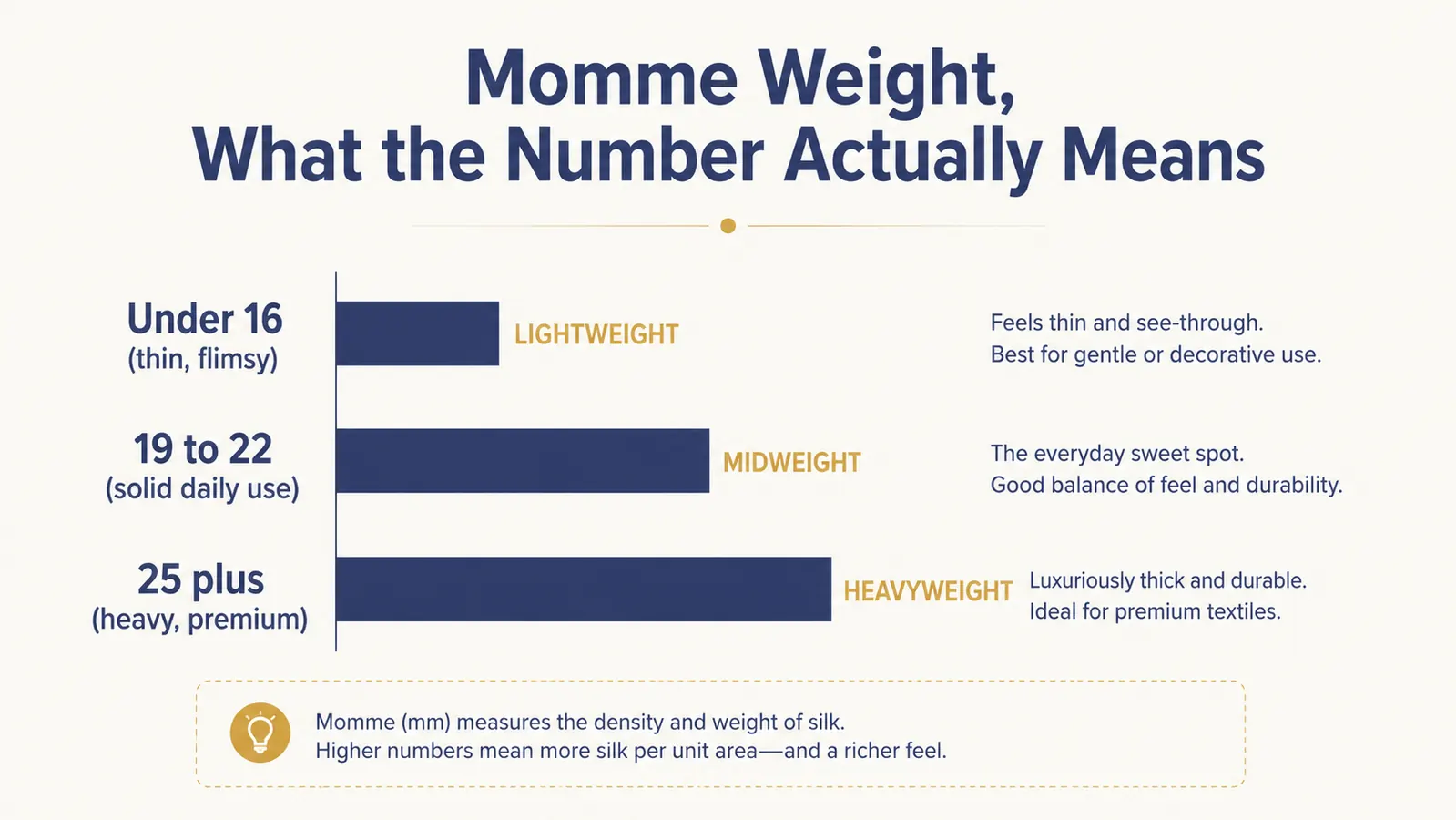
Momme is the unit that measures how dense a silk fabric is, roughly how much a fixed area of the material weighs. Higher momme generally means thicker, more durable, more opaque fabric. Lower momme means thinner, lighter fabric that can feel almost see-through and tends to wear out faster. Most sleep-quality silk pillowcases sit somewhere in the high teens to low twenties, with anything above twenty-five considered heavy and premium. Below sixteen, you're often looking at a fabric so thin it barely qualifies as durable bedding, regardless of what the fiber content actually is.
Here is the red flag nobody spells out clearly. Real mulberry silk is genuinely expensive to produce, and momme weight is directly tied to how much raw material went into the fabric. When you see a listing advertising a high momme number, twenty-five or thirty, at a price that undercuts every other silk pillowcase on the page, be skeptical rather than excited. Either the momme number is inflated and not independently verifiable, or the silk is real but the rest of the construction, stitching, hem, closure, has been cut to hit that price point. A low momme number at a low price is at least an honest low momme number. A high momme claim at a bargain price is the combination that should make you slow down and read buyer photos closely before trusting the listing's own numbers.
For the DKBslik case specifically, the listed momme sits in that solid, unglamorous middle range rather than claiming to be some kind of luxury outlier. That consistency between the price and the stated weight is, honestly, part of what made me trust it more than a flashier listing making bigger promises for less money.
The Washing Rules That Will Ruin It If You Ignore Them
I mentioned earlier that I broke the care instructions on purpose, once, and it's worth being specific about what that actually did. I washed the DKBslik case on a regular cycle with warm water and no protective mesh bag, alongside a normal load of towels and clothing. The result was not catastrophic, but it was noticeable. The fabric came out with a rougher, slightly matted hand feel compared to a case washed cold and gentle in a bag, and I could see faint pilling starting along one edge where it had rubbed against a zipper on another item in the wash.
That single wash didn't ruin the case, but it aged it faster than several proper washes combined, and it's easy to see how a few more warm, unprotected wash cycles would leave it looking worn out within a couple of months instead of holding up over a year of regular use. The actual rules are simple and I'd treat them as non-negotiable rather than optional: cold water only, a gentle or delicates cycle, a mesh laundry bag to keep the fabric from rubbing against zippers or rough seams on other items, a mild detergent with no fabric softener, and air drying instead of the dryer whenever you can manage it. Skip any one of those and you're trading long-term durability for a few minutes of convenience on laundry day.
The Slide Nobody Warns You About
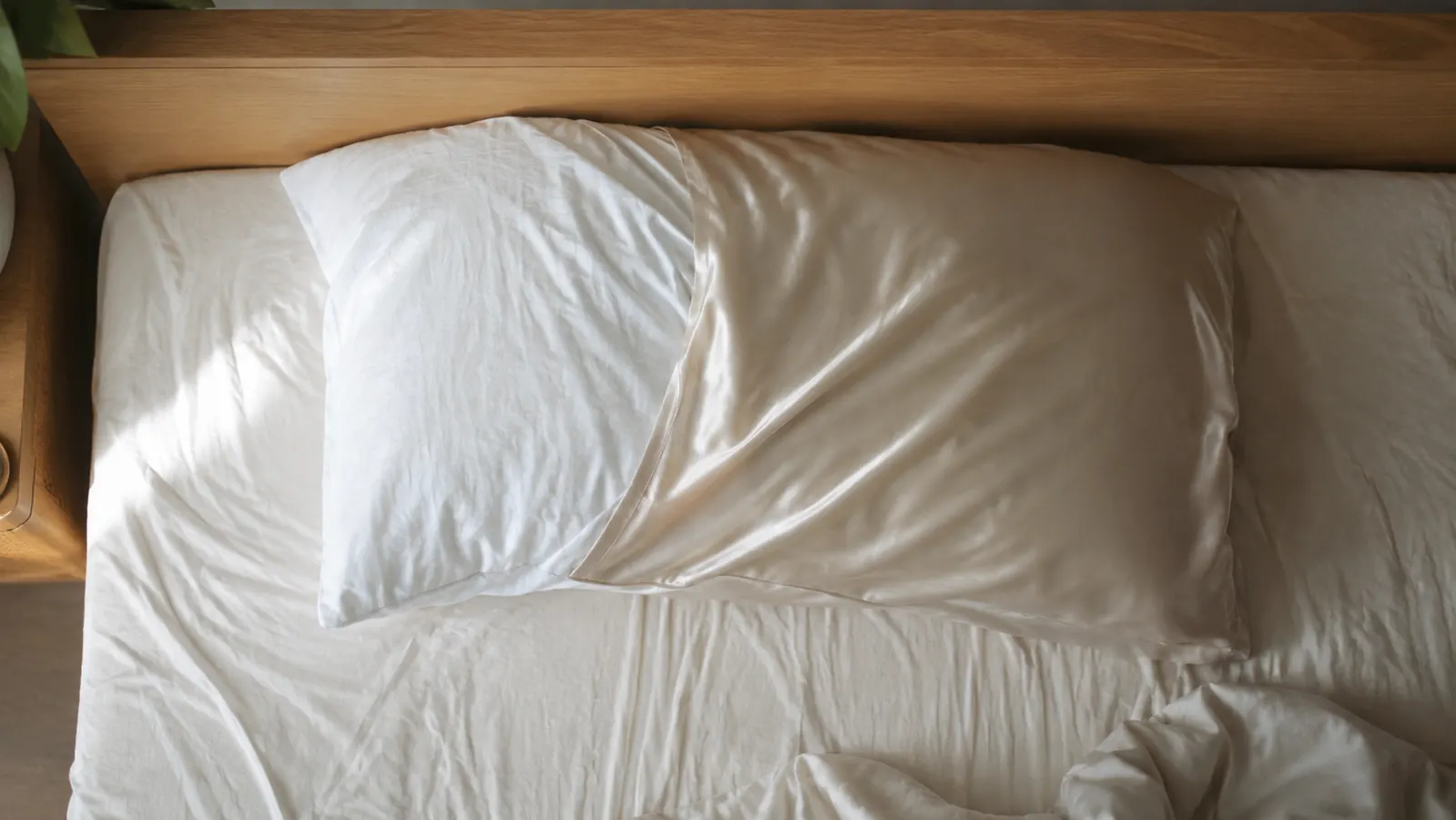
This is the complaint that almost never makes it into a glowing review, because it sounds like a small thing until it's happening to you at two in the morning. Silk's low friction, the exact quality that reduces hair tangling and skin creasing, also means the case itself moves on the pillow more than a cotton or microfiber case would. On restless nights, or if your partner tends to grab or shift the pillow, the DKBslik case can gradually shift and bunch toward one side rather than staying perfectly centered the way a grippier fabric would.
It never came fully off the pillow for me, since the hidden zipper closure keeps the pillow enclosed rather than leaving an open envelope end that can gape. But I did wake up more than once to find the case had migrated a few inches to one side overnight, with a bit of the bare pillow corner exposed underneath. If you're a genuinely still sleeper, this may never register as a problem. If you toss and turn, or share a bed with someone who does, it's a real texture-of-daily-life annoyance that no listing photo will ever show you, because the photos are all taken on a pillow that hasn't been slept on.
Are the Hair and Skin Claims Actually Real
The category loves big language, anti-frizz, anti-acne, beauty sleep, and I want to be direct about what's happening underneath those words. A silk pillowcase is not a treatment and it does not act on your skin or your hair the way a product formulated to do so would. What it does is reduce friction and reduce how much overnight moisture the fabric pulls away from your skin compared to cotton, which is a rougher, more absorbent weave. Less friction against your hair overnight can mean less mechanical tangling and less of that dry, static frizz some people wake up with. Less moisture pulled from your face can mean your skin feels less dried out by morning.
That is a real, physical mechanism, and it's worth something. It is not the same thing as a treatment for acne, and I'd be cautious of any DKBslik listing or competitor that leans hard into medical-sounding language, because a pillowcase cannot diagnose or fix a skin condition. If your breakouts or hair damage have a cause beyond overnight fabric friction, hormones, product buildup, a harsher shampoo routine, this pillowcase is not going to solve it, and you shouldn't expect it to. What you can honestly expect is a small, consistent reduction in one source of nightly friction, which for some people is a meaningful improvement and for others is barely noticeable.
What I Liked
- Listing states fiber content and momme weight plainly instead of hiding behind the word silk
- Momme weight sits in a believable range for the price rather than an inflated claim
- Hidden zipper keeps the pillow enclosed even when the case shifts overnight
- Real, if modest, reduction in hair friction and overnight skin dryness
- Held up to a deliberate wrong-way wash without falling apart, just showing wear
Where It Falls Short
- Warm water or a full cycle without a mesh bag noticeably roughens the fabric after even one wash
- The case slides and bunches on the pillow more than cotton or microfiber
- Momme and fiber content require reading the specifications, not just the title, to confirm
- No amount of silk will fix skin or hair issues that come from something other than fabric friction
A high momme claim at a bargain price should slow you down, not speed you up. Real silk has never been cheap to make.
Who This Is For
This case makes sense for someone who has already decided they want real silk, is willing to read a listing's specifications instead of trusting a headline, and is willing to follow a short but strict wash routine to get the durability the fabric is capable of. It's a good fit if you run warm at night, deal with morning frizz or tangling, or just want fewer overnight crease lines without paying premium prices for it. It also suits a still or moderate sleeper who won't fight the case's tendency to slide, since the annoyance mostly shows up on genuinely restless nights.
If you want a deeper side-by-side on how this actually compares to a standard cotton case in daily use, that's covered in this comparison, and if you decide to buy, the care routine that gets the longest life out of it is laid out step by step in this guide.
Who Should Skip It
Skip this if you toss the whole household's laundry into one hot, unsorted wash and aren't willing to change that habit for one pillowcase, because the fabric will show wear faster than the price tag suggests it should. Skip it if you're buying specifically to treat acne or hair damage rather than as one small comfort upgrade among several, since the honest mechanism here is reduced friction, not a treatment. And skip it if a case sliding a few inches overnight would genuinely bother you enough to regret the purchase, because that slide is a real tradeoff of the fabric, not a defect specific to this one case.
Read the fiber content, not just the word silk, before you buy any pillowcase like this.
The DKBslik listing states its fiber content and momme weight plainly, which is why I trusted it enough to test in the first place. Check the current listing and today's price for yourself.
Amazon Check Today's Price on Amazon →