
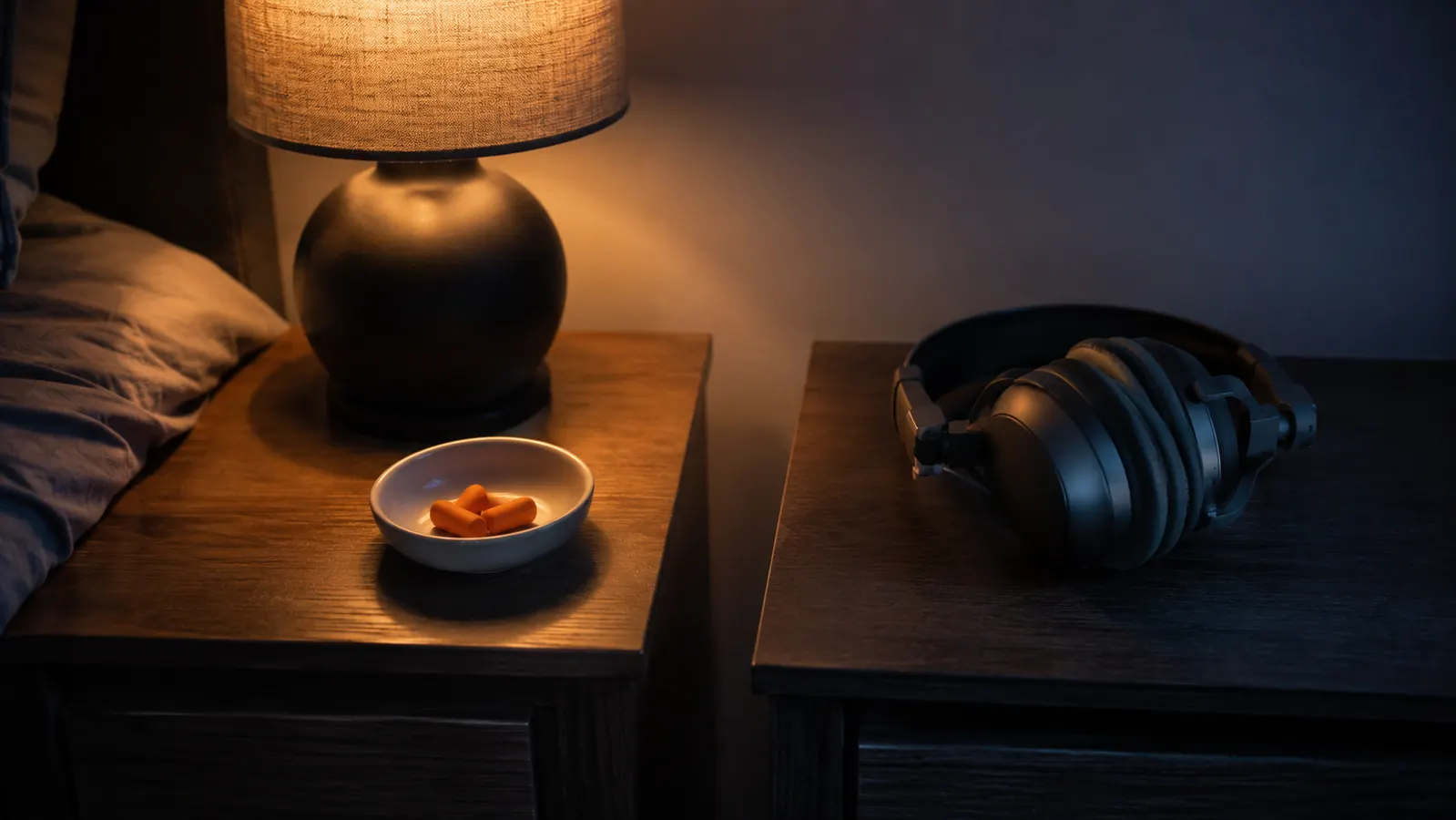
The short answer, if you sleep on your side and share a bed with someone who snores, is that a pair of Flents foam ear plugs will get you through more nights than noise cancelling headphones will, and it will cost a fraction as much over a year. I've slept with both in rotation for months, foam most nights and headphones on the nights I specifically wanted a sleep sound or a podcast running quietly, and the difference in comfort by three in the morning is not close.
That doesn't mean noise cancelling headphones lose everywhere. Active noise cancelling is genuinely better at erasing a steady, low frequency drone, an air conditioner cycling on, a plane engine, a neighbor's bass thumping through a shared wall, than any foam plug will ever be. If that's your specific noise problem and you tend to sleep on your back, the tradeoff shifts in the headphones' favor. But for the more common bedroom problem, a partner's snoring plus general night noise while lying on your side, foam wins on comfort in a way headphones can't overcome no matter how good the drivers are.
| Flents Foam Ear Plugs | Noise Cancelling Headphones | |
|---|---|---|
| What It Blocks Best | Sudden, higher pitched sound: snoring, sharp noises, a door closing, most of it muffled but still faintly audible | Constant low frequency drone: HVAC hum, airplane engines, road rumble, cancelled out almost entirely by the active circuitry |
| Side Sleeper Comfort | Low profile foam sits flush inside the ear canal, no pressure against a pillow | Ear cups press into the side of the head and the pillow, most people can't tolerate a full night lying on their side |
| Manufacturer Noise Rating | NRR 33, per Flents' own packaging | No standardized NRR rating, active cancellation performance varies by model and how charged the battery is |
| Power Needed | None, works straight out of the pack, nothing to charge or forget | Needs charging every one to two nights of steady overnight use, a dead battery means dead noise cancelling |
| Cost Over a Year | A bag of ten pairs runs around six to seven dollars, replacing a pair every two to three nights still lands well under fifty dollars a year | A hundred fifty to three hundred fifty dollars up front for a decent pair, plus eventual ear pad or battery wear |
| Hygiene and Replacement | Disposable, swap in a fresh pair every few nights, nothing to wash or wipe down | Reusable cups need regular wiping, foam or leather ear pads absorb sweat and skin oil over months of nightly wear |
| Hearing an Alarm or Someone Calling | Sound is reduced, not erased, most people still hear a phone alarm or their name from across the room | Active cancellation plus a sleep sound playing over it can genuinely mute an alarm, worth thinking about if you rely on one |
| Staying in Place Overnight | Nothing to fall off or reposition once the foam has expanded and seated itself | Cups can shift, dig in, or slide off entirely mid roll, and several models simply aren't built for all-night side sleeping |
Where Flents Foam Ear Plugs Win
The win here is almost entirely about physics and body position. Foam sits inside the ear, flush with the opening, so a pillow can press against the side of your head all night without touching anything that matters. Flents in particular use a low profile contour shape that doesn't stick out past the ear the way some bulkier foam plugs do, which matters more than it sounds like it should once you've spent even one night with something hard pressing into your ear against a pillow. Headphones, by contrast, are built around a cup that has to sit somewhere, and on a side sleeper that somewhere is always partly on the pillow and partly on your head.
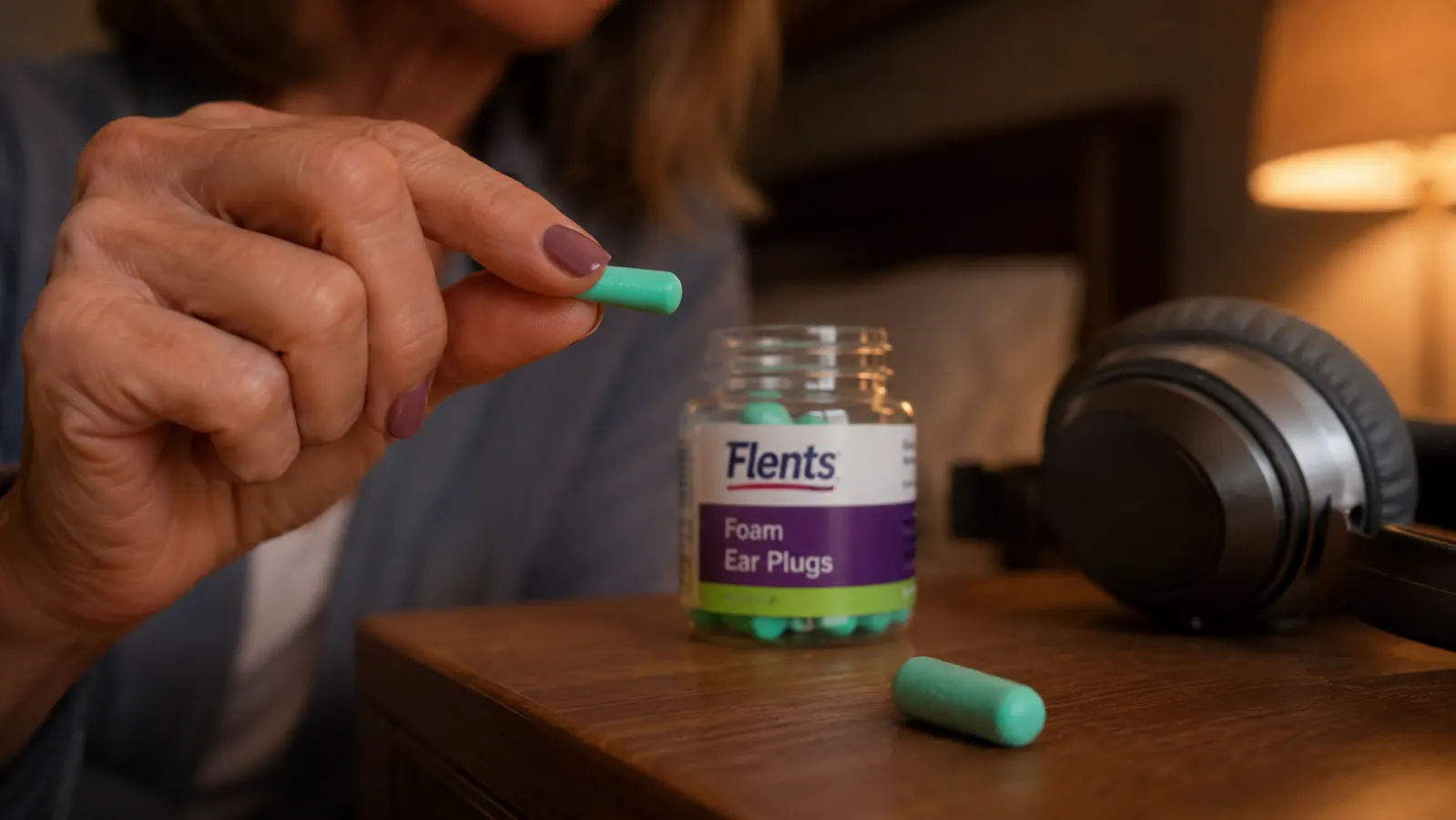
The second win is upkeep, or the lack of it. Flents ear plugs need nothing before use, no charging cable, no app to pair, no remembering to plug them in before bed. You roll a pair between your fingers, press it in, and wait about thirty seconds for it to expand. That simplicity turns into real reliability over months, because a product with zero setup steps is a product you'll actually use every single night instead of skipping on the nights you forgot to charge something. It's also the reason foam plugs travel so well, a full bag fits in a jacket pocket and never dies on a red-eye flight the way a headphone battery eventually will.
Where Noise Cancelling Headphones Win
Give credit where it's due. Active noise cancelling technology is genuinely better than foam at one specific job: erasing a constant, low pitched drone. That's not a small thing if your actual noise problem is an air conditioning unit that never shuts off, a busy road with steady traffic rather than sharp honks, or an apartment near an airport flight path. The circuitry in noise cancelling headphones listens to that steady hum and generates an inverse sound wave to cancel it out, which is a different mechanism entirely from foam simply muffling sound by blocking the ear canal. For that category of noise specifically, headphones can produce a quieter result than foam ever will.
Headphones also win if you want sound going into your ears on purpose, a white noise track, rain sounds, a low volume podcast to fall asleep to. Foam plugs can't deliver that, they only take sound away. If falling asleep to audio is part of your routine, and you tend to sleep on your back or don't move around much once you're out, over-ear noise cancelling headphones can genuinely do a job that foam physically cannot. That combination, playing something while blocking the low hum around it, is the one scenario where I'd reach for headphones over a plain foam plug without hesitation.
If your problem is a snoring partner, not a hum in the walls, start here
No charging, no pairing, nothing to remember before bed. Flents foam ear plugs are cheap enough to keep a stack on the nightstand and simple enough to actually use every night.
Amazon Check Today's Price on Amazon →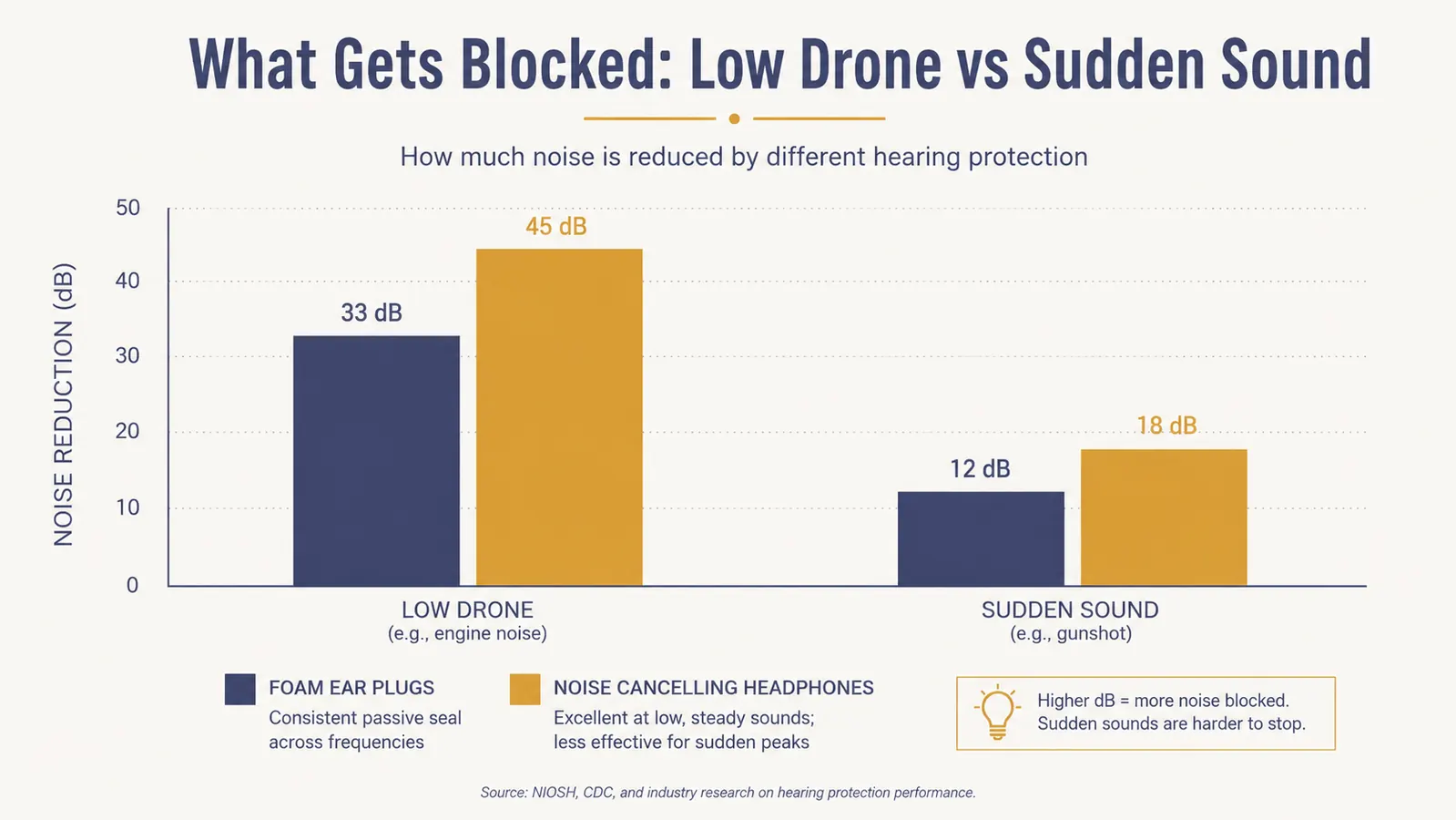
What Each One Actually Blocks, and Why It Matters
It helps to separate noise into two rough categories: steady drone and sudden sound. A furnace, a fan, road rumble, an HVAC unit, all of that falls into steady drone, and it's the category where active noise cancelling genuinely shines, because the technology is specifically designed to listen and counter a repeating waveform. Snoring, a door closing, someone talking in another room, a phone buzzing, those are sudden or irregular sounds, and that's the category foam handles better, simply because foam physically blocks the ear canal regardless of the shape of the sound wave hitting it.
This is the piece most comparisons skip, and it's the reason a flat answer like "headphones are more advanced, so they must be better" falls apart in an actual bedroom. Most people's real nightly noise problem is a mix of both, a partner's snoring layered on top of a quiet hum from the hallway, but the snoring is usually the louder, more sleep-breaking part of that mix. Since foam handles irregular, sharper sound better than active cancelling does, it ends up being the more useful tool for the single most common complaint people bring to a comparison like this one.
The Side Sleeping Problem Headphones Can't Fully Solve
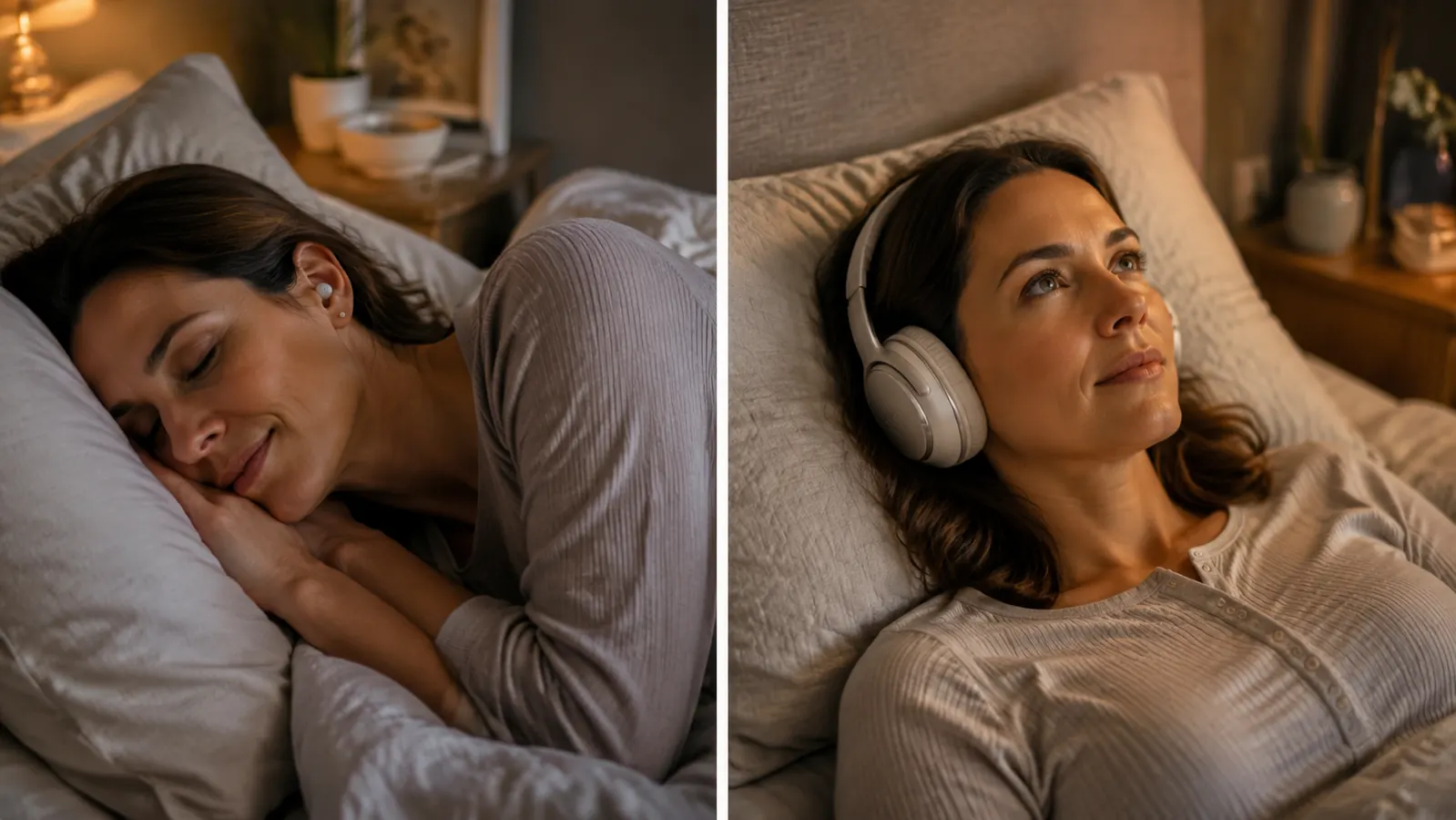
I want to be specific about this because it's the crux of the whole comparison. If you sleep flat on your back and rarely move, an over-ear headphone can work fine all night, the cups just rest against the pillow with nothing pressing into your head. Most people don't sleep that way. Side sleeping is extremely common, and the moment your ear is against the pillow, a headphone cup becomes a hard object caught between your skull and the mattress. Some newer flat-profile models try to solve this with thinner drivers, but even the best of them still add bulk that a low profile foam plug simply doesn't have.
I tested this directly, alternating nights with foam and nights with headphones over several weeks, and the pattern was consistent. On foam nights I fell asleep on my side without thinking about my ears at all. On headphone nights, I woke up more than once repositioning a cup that had folded awkwardly under my head, or I gave up and rolled onto my back specifically to keep the headphones comfortable, which isn't the sleep position I'd naturally choose. If you already know you're a side sleeper, that alone should weigh heavily in this decision before you even get to the noise-blocking specifics.
Active noise cancelling wins the engineering argument. Foam wins the argument that actually matters at 2 a.m., which is whether you can forget it's even there.
Cost, Charging, and the Upkeep Nobody Mentions
A decent pair of noise cancelling headphones runs anywhere from a hundred fifty to over three hundred fifty dollars, and that's before you factor in ear pad replacement down the line, since pads that press against your face and pillow every night wear out faster than headphones used for a few hours of commuting. They also need charging roughly every one to two nights of steady overnight use, which means the routine includes remembering to plug them in, something that's easy to forget after a long day and painfully obvious the first time you reach for dead headphones at bedtime.
Flents foam ear plugs flip that entire equation. A bag of ten pairs costs around six or seven dollars, and because foam degrades with use, most people naturally cycle through a pair every two to three nights anyway, which still lands well under fifty dollars a year even at a generous replacement pace. There's no battery to die, no charging cable to pack for a trip, and no ear pad that needs replacing eighteen months in. The ongoing cost is real, foam is disposable by design, but it's small and predictable in a way that a headphone budget rarely is.
Who Should Buy Which
If your main problem is a snoring partner, general household or street noise, and you sleep on your side, get Flents foam ear plugs first. They're inexpensive enough to try without a second thought, comfortable enough to wear every night without adjusting your sleep position, and they don't depend on a battery to keep working. I wrote up what six months of nightly use with these actually looked like if you want the longer version of how they hold up over time, including how often a single pair needs replacing and what the foam feels like after hundreds of nights.
If your problem is genuinely a low, constant drone, an air conditioner, a highway, a flight path, and you sleep mostly on your back or don't move much once you're out, noise cancelling headphones are worth the investment, and I'd rather tell you that honestly than pretend foam solves every noise problem equally well. It doesn't. For most people weighing the two, though, the deciding factor ends up being sleep position more than noise type, and side sleepers land on foam almost every time. If you're still deciding, the honest review covering what nobody tells you about wearing foam plugs nightly goes through the tradeoffs in more detail, including the parts that took some getting used to.
For most bedrooms, this is the simpler fix
No charging, no fitting a cup around your head, nothing to remember before you turn off the lamp. See today's price on Flents foam ear plugs and decide for yourself.
Amazon Check Today's Price on Amazon →